What passengers likely noticed first
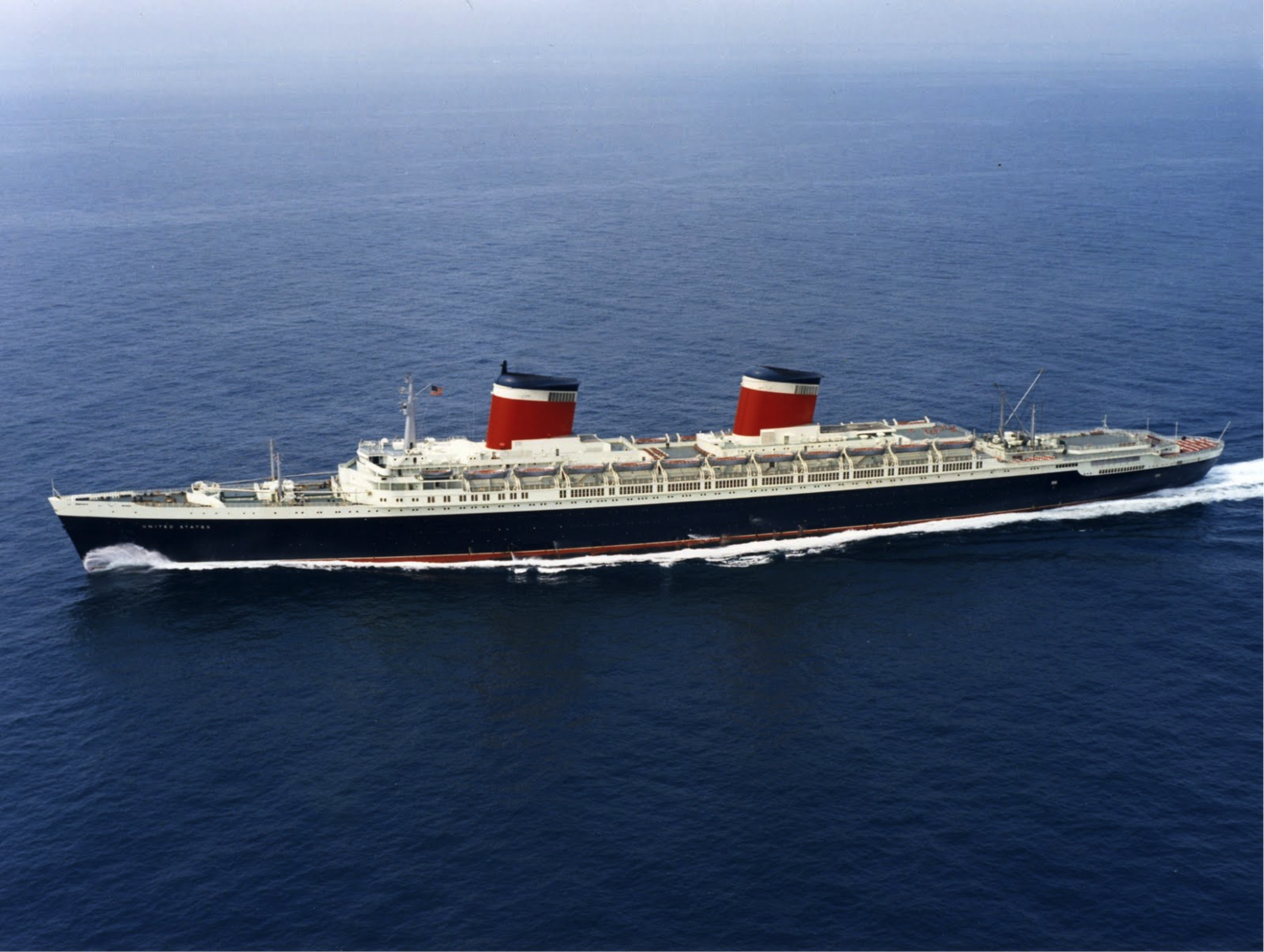
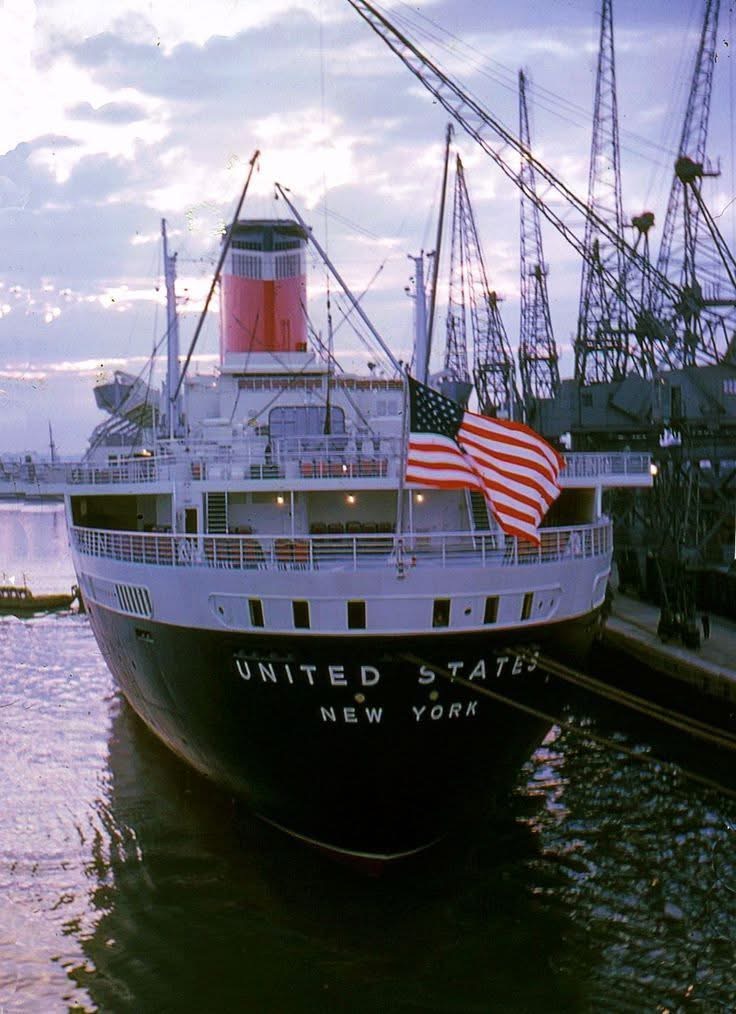
The scale of the hull, the patriotic funnel colors, the streamlined exterior, and the sense that this was a liner defined by speed as much as luxury.
A curator-minded reconstruction of a typical Atlantic crossing aboard SS United States: boarding, meals, public rooms, deck routines, shipboard service, and the feel of life aboard America’s great postwar express liner.
This page does not invent one passenger’s diary or pretend that every crossing aboard United States felt the same. Instead, it reconstructs the likely texture of a typical Atlantic voyage by combining the ship’s known service identity, surviving photographs, deck plans, public-room evidence, menus, promotional material, and the broader realities of postwar transatlantic liner travel. Where the evidence is stronger, the language is firmer. Where the picture is interpretive, the wording stays careful.
Evidence & interpretation note
SS United States was both an admired passenger liner and a highly engineered national project. A passenger’s voyage should be understood through both lenses: comfort, service, and glamour above decks; speed, fireproofing, compartmentation, and operational discipline underneath the public image.
Step one
A voyage aboard SS United States likely began with a strong sense of modern American order. Passengers approaching the ship would have encountered not a romantic Edwardian relic, but a postwar liner built around speed, efficiency, safety, and national prestige. The boarding process still involved familiar liner-world routines—luggage, tickets, customs, stewards, gangways, farewells—but the mood belonged to the jet-age threshold rather than the prewar golden age.
The ship’s appearance reinforced that impression. Her long, low profile, sweeping superstructure, and red, white, and blue funnels projected confidence without the heavy ornamental language associated with some earlier liners. Even before a passenger entered a public room, United States communicated velocity. She looked like a ship that existed to cross quickly.
The first impression probably mixed spectacle with procedure. Friends and relatives might wave from the pier, photographers might search for notable passengers, and stewards would direct travelers toward their accommodations. But beneath the excitement was a working machine on a schedule. The crossing began as both event and operation.
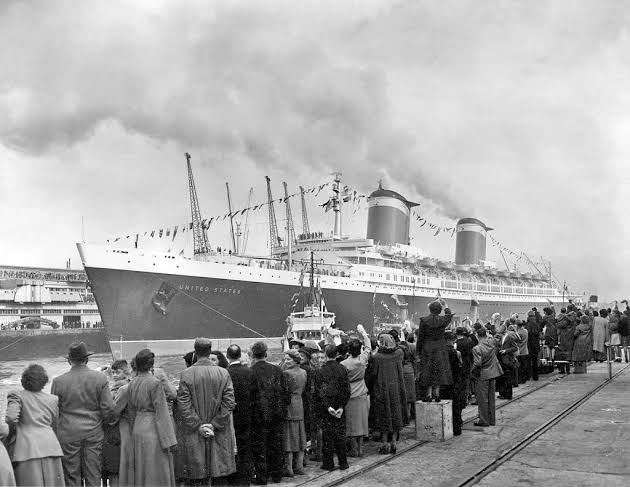
The scale of the hull, the patriotic funnel colors, the streamlined exterior, and the sense that this was a liner defined by speed as much as luxury.
Boarding routes, cabin assignment, baggage handling, public-room access, and the tone of early service all reflected the ship’s class structure.
Excitement, prestige, press attention, family farewells, and efficient shipboard management likely overlapped from the very beginning.
Step two
Once aboard, passengers entered a ship whose interiors were intentionally modern, controlled, and fire-conscious. United States did not depend on carved historical revivalism to make her point. Her public rooms were shaped by postwar American taste: bright spaces, clean lines, durable finishes, careful color, and a strong preference for materials that served the ship’s safety philosophy.
For some travelers, that modernity may have felt exciting. For others accustomed to older liners, it may have felt comparatively restrained. The ship’s glamour was real, but it was not the same kind of glamour offered by the great European liners of the 1930s. United States was less a floating palace than a disciplined, high-performance environment with carefully staged social spaces.
| Feature | Likely impression | Interpretive note |
|---|---|---|
| Interior character | Modern, bright, and controlled | The ship’s public rooms reflected postwar American design priorities rather than older European historicism. |
| Safety philosophy | Present but not always obvious | Fire-resistant materials and disciplined engineering shaped the passenger environment even when passengers simply perceived “modernity.” |
| Orientation | Impressive, but structured | A passenger still had to learn the ship’s internal geography: cabins, decks, lounges, dining rooms, theaters, and class boundaries. |
| General tone | Fast, confident, and American | The ship’s reputation as a record-holder likely colored how passengers interpreted even ordinary spaces and routines. |
Step three
Stateroom life was where the voyage became personal. However famous the ship was, the daily crossing still depended on practical questions: how well luggage fit, how private the room felt, how the ship moved, how service responded, and how easily a passenger could dress, rest, and prepare for meals. The cabin was refuge, dressing room, sleeping space, and temporary address.
A careful reconstruction should preserve the ship’s class distinctions. First Class passengers experienced the vessel through the most prestigious accommodations and public rooms. Cabin Class passengers occupied a respectable middle ground, with their own dining and lounge spaces. Tourist Class passengers still traveled aboard a famous record-breaking liner, but with a more functional and economical version of the shipboard experience.
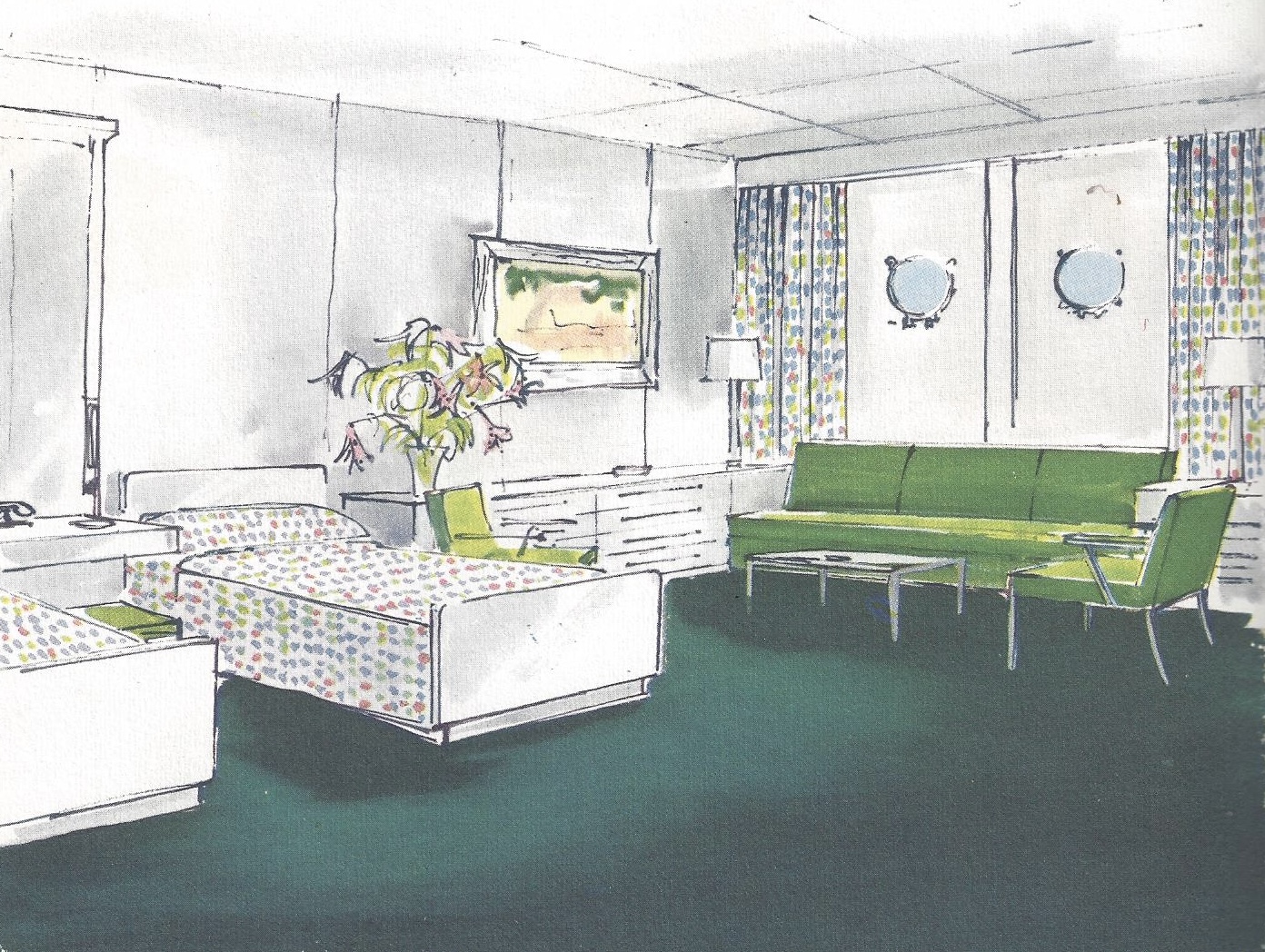
The most polished version of the crossing: stronger privacy, better access to prominent rooms, and a closer relationship to the ship’s prestige image.
Comfortable and socially respectable, with access to dedicated public rooms and dining facilities that made the crossing feel complete rather than merely functional.
More economical and practical, but still part of the experience of crossing on the fastest and most recognizable American liner of the postwar era.
Curatorial caution
Nostalgia can easily make every passenger seem equally surrounded by glamour. A stronger reconstruction keeps the differences visible: class shaped space, service, privacy, and memory.
Step four
After departure, the crossing settled into shipboard time. Aboard United States, that time was compressed by speed: fewer days than slower liners, but still enough for routines to form. Passengers woke to engine vibration, ocean light, weather reports, meal schedules, and the gradual familiarity of corridors, stairways, decks, and stewards.
The ship’s rhythm likely combined leisure and velocity. Deck walks, reading, card games, conversations, shopping, hair appointments, children’s routines, theater programs, and evening drinks all took place inside a vessel known above all for getting across the Atlantic quickly. That tension—relaxed shipboard life inside a record-breaking machine—is central to the feel of the crossing.
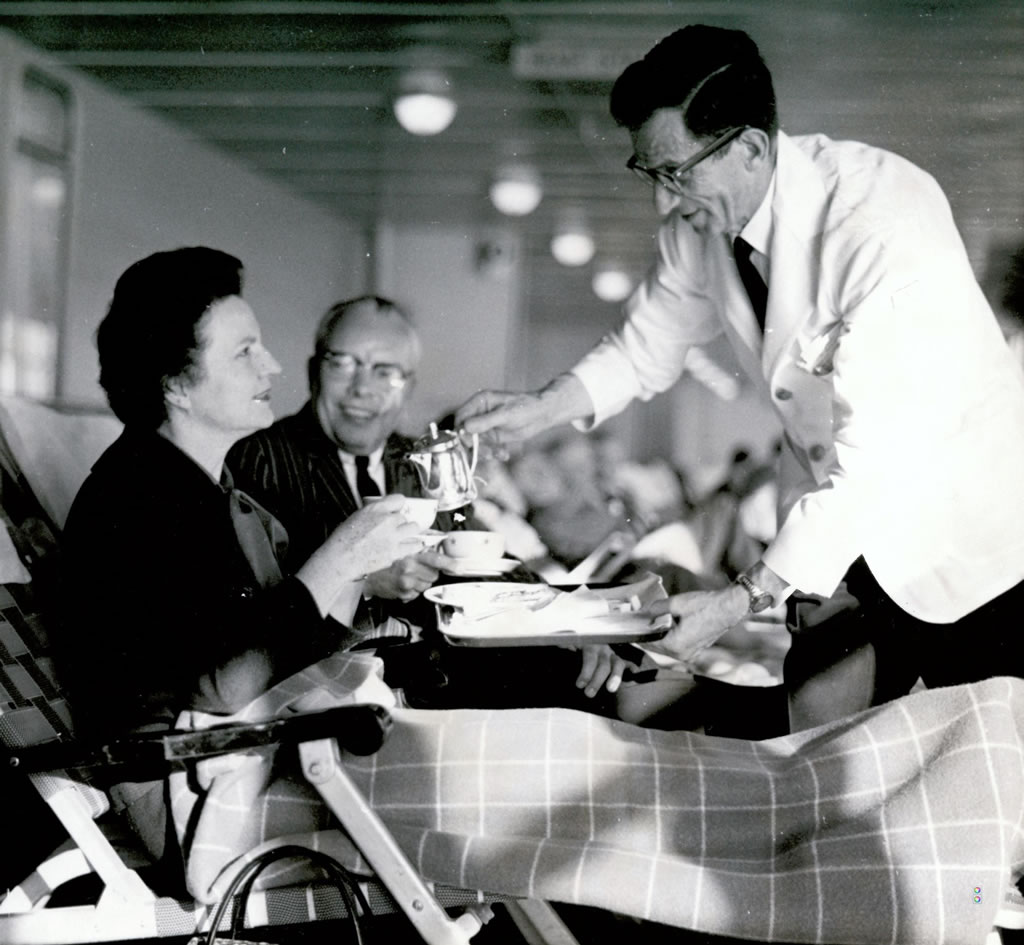
Passengers emerged into the day through dining rooms, corridors, and open decks. Weather set the tone quickly: a clear morning expanded the ship; a rough one narrowed it.
Deck chairs, walking circuits, lounge conversations, and horizon-watching likely created much of the voyage’s texture. Passengers watched the sea, the ship, and each other.
The day moved through lunch, lounges, theater programs, smoking rooms, children’s spaces, shops, barber or beauty appointments, writing, cards, and the quiet rituals of being at sea.
Evenings carried the strongest sense of occasion. Dining rooms, bars, lounges, theaters, and social circulation turned the liner into a temporary public stage.
Step five
Dining was one of the clearest ways passengers measured the ship against expectation. On United States, meals were not only about food; they organized the day, reinforced class distinctions, and gave the crossing a repeated social rhythm. Passengers returned to dining rooms again and again, making meals one of the most memorable structures of the voyage.
The experience likely varied sharply by class, but the broader ritual was shared: dressing appropriately, arriving at expected times, learning the table, recognizing stewards, reading menus, and letting meals divide the day into manageable parts. In this sense, dining acted almost like a clock.
The ship’s service culture also mattered. A fast crossing still needed to feel composed. Stewards, waiters, room staff, bellboys, cooks, engineers, and countless unseen crew members helped make a highly technical vessel feel habitable to passengers who mostly encountered the ship through comfort and routine.
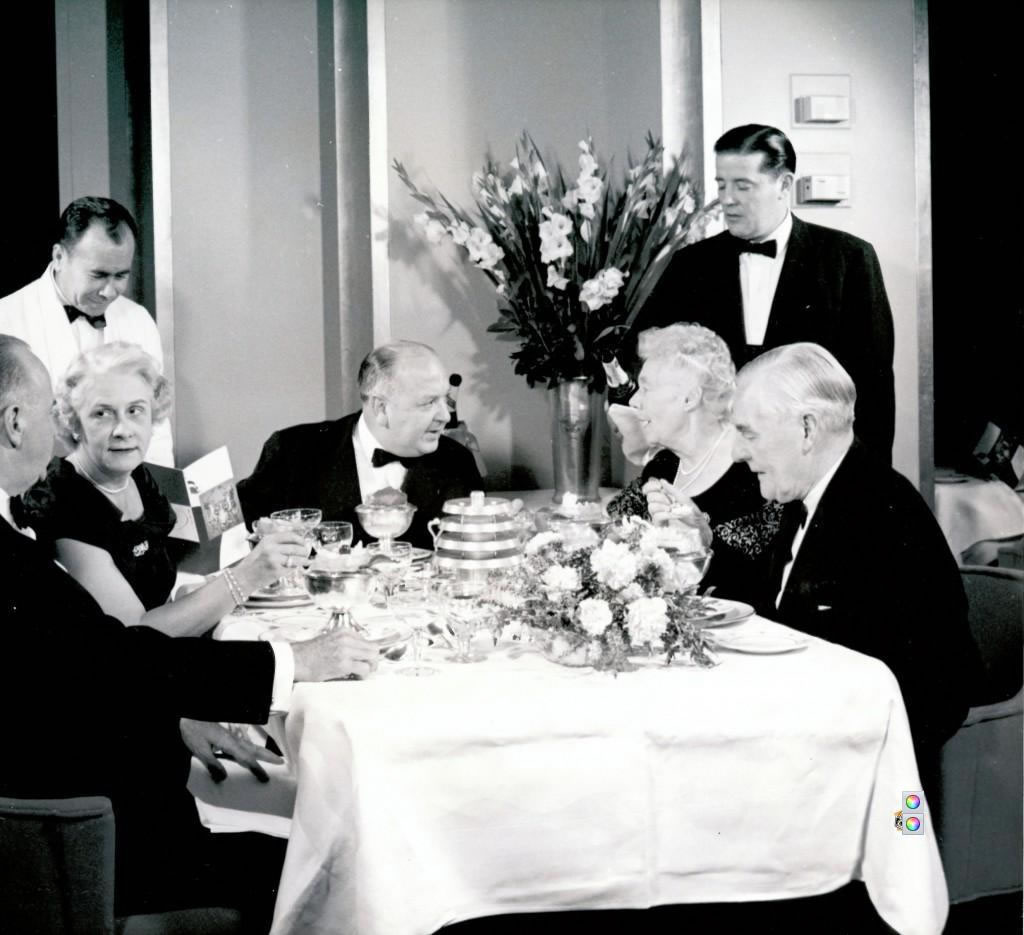
Dining likely felt polished but modern, with the ship’s American identity expressed through service, presentation, and carefully managed public spaces.
Mealtimes structured the crossing, giving passengers fixed points around which deck life, rest, conversation, and evening plans could form.
Dining rooms made class visible through menus, décor, service standards, access, and the subtle codes of who belonged where.
Step six
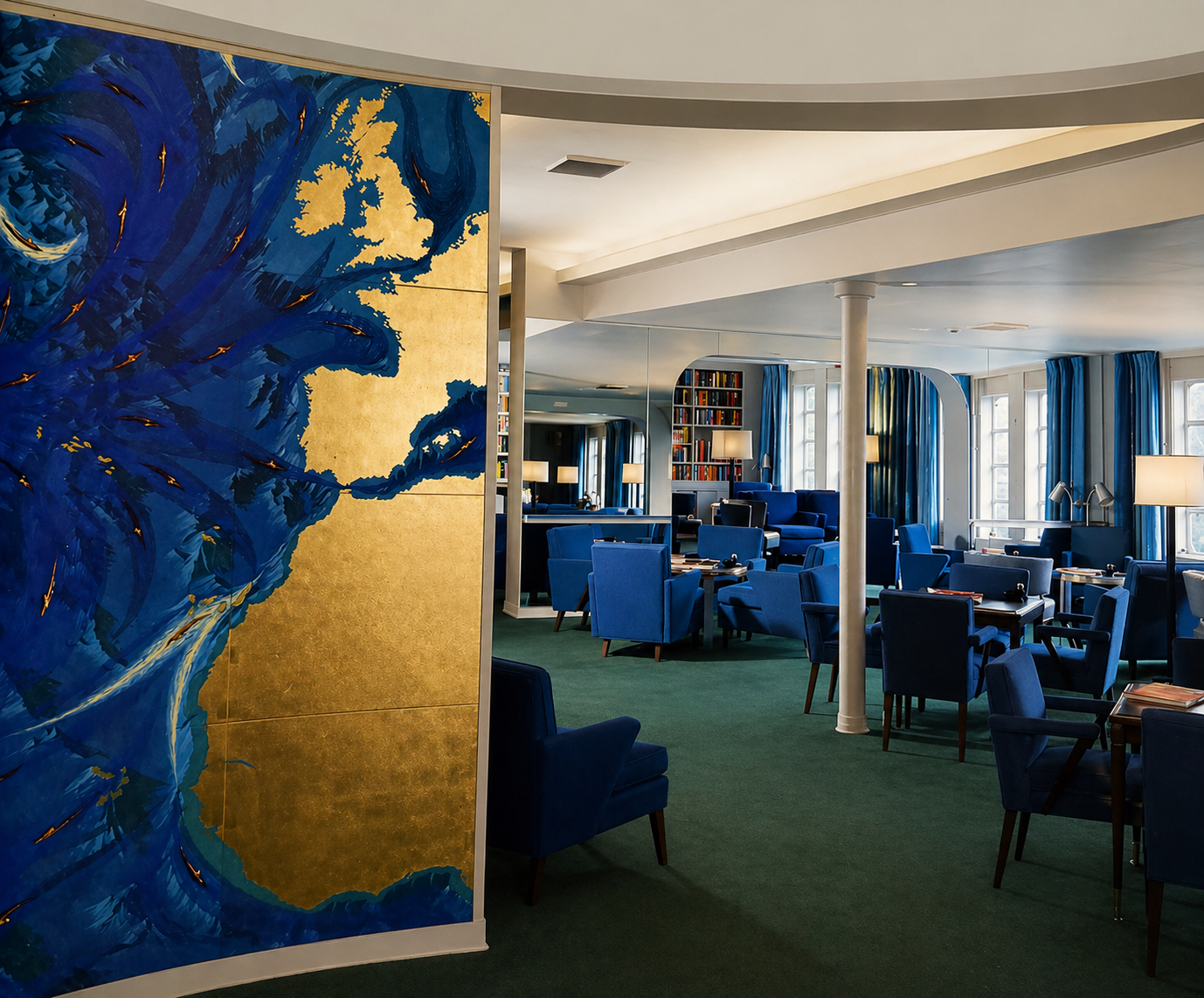
The public rooms aboard United States were where the crossing became visible. First Class passengers might remember the ballroom, observation lounge, smoking room, dining room, theater, and swimming pool. Cabin and Tourist Class passengers encountered their own lounges, smoking rooms, dining rooms, and theaters. Together these spaces formed several overlapping versions of the same ship.
The ship’s interior world was not merely decorative. Each room created a kind of behavior: dining, dancing, reading, watching, smoking, conversation, performance, exercise, or quiet retreat. A passenger learned the voyage by moving between these rooms, gradually discovering which spaces felt grand, which felt comfortable, and which became habitual.
Because United States was designed with strong fire-safety priorities, her interiors also carried a particular material character. The public rooms could be attractive and stylish, but they were constrained by a design philosophy that privileged safety and durability over lavish traditional woodwork.
| Room or area | Likely role in the voyage | Interpretive value |
|---|---|---|
| First Class ballroom | Evening display, music, dancing, and social ceremony | Shows how the ship translated speed and national prestige into a glamorous passenger setting. |
| Observation lounge | Sea-watching, conversation, and quiet prestige | Connects the social experience directly to the Atlantic horizon and the ship’s forward motion. |
| Smoking rooms | Conversation, drinks, cards, and gendered leisure conventions | Reveals how older liner social habits persisted inside a modern postwar vessel. |
| Theaters | Entertainment, gathering, and shipboard programming | Helped fill the compressed days of a fast crossing with scheduled activity. |
| Swimming pool and recreation areas | Exercise, novelty, and leisure at sea | Shows the liner as a complete environment rather than simply a mode of transport. |
Step eight
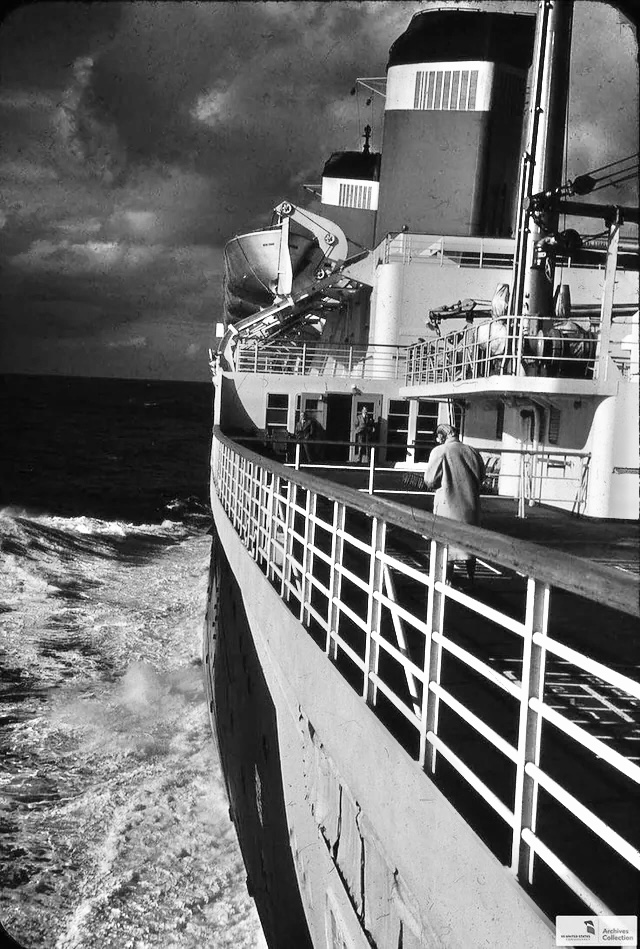
Any reconstruction that remains only polished is incomplete. United States was famous for speed, but speed did not remove the Atlantic from the experience. Wind, vibration, engine sound, spray, fog, weather reports, closed decks, and changing sea states all shaped how passengers understood the ship. A calm crossing could feel expansive; a rough one could make even a great liner feel small against the ocean.
Her high speed likely affected perception. The voyage moved with urgency. Passengers knew they were aboard a ship designed to cross rapidly, and that knowledge could color even quiet moments: a deck chair, a corridor, a dining-room conversation, a glance at the wake. The ship’s reputation traveled with them.
But the less romantic details also mattered. A passenger might remember noise, drafts, motion, the smell of smoke, the difficulty of walking in rough weather, or the sudden inward turn of the ship when decks became unpleasant. The famous liner was still a working vessel at sea.
Why this section matters
The ship’s speed record can make the crossing sound almost abstract. In lived experience, speed was felt through schedule, vibration, wind, weather, deck use, and the sense that the Atlantic was being consumed quickly beneath the hull.
Step nine
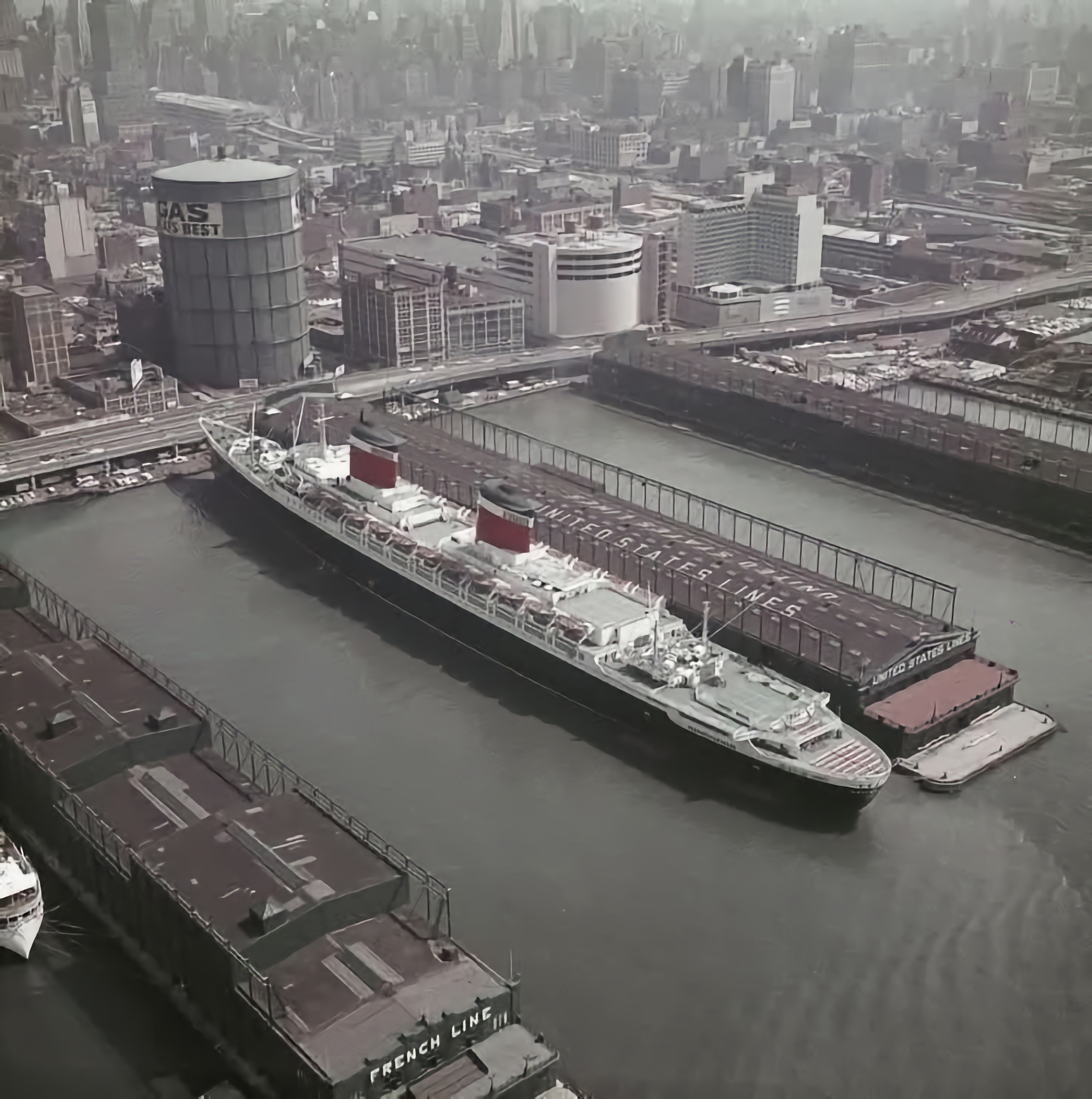
As landfall approached, the voyage changed character. The ship that had seemed self-contained in mid-ocean now pointed toward customs, baggage, hotels, trains, families, business appointments, and onward travel. The crossing’s social world began to dissolve even before the ship reached the pier.
Passengers likely moved outward again: to decks, railings, observation spaces, and windows. The abstraction of open ocean gave way to harbor traffic, skyline, tugs, pilots, and the practical choreography of arrival. Cabins became temporary again. Public rooms that had felt familiar now belonged to the final hours.
The last impression depended on the crossing itself. A smooth voyage could confirm United States as a triumph of speed and comfort. A rough or crowded one might leave a more complicated memory. Either way, passengers stepped ashore having briefly inhabited one of the most distinctive Atlantic environments of the postwar era.
Method
The broad rhythm of a crossing, the role of class, the importance of public rooms and dining, the impact of weather, and the way speed and safety shaped the passenger environment.
The exact emotional tone of a particular voyage, the experience of every passenger, and the degree to which publicity language matched lived reality in all classes.
Because it helps translate United States from a famous profile and speed record into a lived environment shaped by design, service, hierarchy, machinery, and memory.
Short answers
No. It is a broad reconstruction of probable experience rather than a retelling of one specific diary, memoir, or voyage account.
Both descriptions matter, but neither is complete alone. She carried passengers in comfort and style while also embodying an unusually disciplined engineering, safety, and speed philosophy.
No. Class, weather, personal expectations, travel purpose, familiarity with liners, and the specific crossing all shaped how the ship was experienced and remembered.
Closing thought
To reconstruct a voyage aboard SS United States is to move beyond the famous funnels, the Blue Riband, and the language of national prestige. It is to ask what passengers actually encountered for several days at sea: cabins, dining rooms, lounges, deck chairs, weather, service, sound, speed, and the temporary society of a ship in motion. The answer is necessarily partial, but that partialness is part of the work. It keeps the ship human.
End of the crossing
For a few days, United States was more than a celebrated silhouette. She was a system of rooms, routines, meals, weather, service, and motion. When passengers stepped ashore, they left the ship behind— but not the impression of having crossed the Atlantic inside a machine built to outrun expectation.
Step seven
Social life, celebrity, and shipboard observation
Social life aboard United States likely emerged through repetition: the same faces at meals, familiar figures on deck, stewards who learned preferences, passengers recognized from newspapers, and conversations resumed across lounges and corridors. A liner crossing placed strangers into a temporary society with its own geography and etiquette.
The ship’s postwar fame added another layer. United States was not just a comfortable ship; she was a record-holder and a symbol of American technical confidence. Passengers could feel that they were participating in something public, even when their daily activities were private and ordinary.
Still, a reconstruction should avoid turning every crossing into a celebrity parade. Most passengers experienced the ship through meals, rest, weather, service, observation, and travel purpose. Prestige was present, but so were boredom, fatigue, seasickness, awkward encounters, and the ordinary errands of travel.