Part of the Titanic topic collection
Titanic’s fame rests partly on disaster, but the ship’s historical and cultural afterlife has also been built through interiors. Public rooms were where White Star luxury became visible: where passengers walked, read, dined, met, lingered, and were meant to feel that the ship was not simply a vessel, but a floating social environment. Some rooms became famous because they were visually spectacular. Others became famous because later books, films, and reconstructions turned them into shorthand for the ship itself. For a broader overview of how these spaces fit into the disaster itself, see the Titanic disaster timeline.
Launched in 1911 and lost in April 1912, Titanic combined marine engineering with highly staged passenger interiors.
Public rooms were the spaces where passengers encountered the ship’s style, hierarchy, and promise of comfort most directly.
Many of the rooms most closely tied to Titanic’s image were first-class spaces, though second-class public spaces also mattered.
At a glance: the rooms most often remembered
How to read these rooms
Titanic’s interiors worked on several levels at once. They provided literal services such as dining, reading, smoking, or refreshment. They also staged class identity, taste, and movement. A grand room near a staircase did different cultural work from a private corner for writing letters or taking coffee. Together, these spaces formed a kind of interior map of social life aboard the ship, a structure that becomes clearer when placed alongside the film versus historical interpretation of Titanic.
Architectural importance
Some rooms mattered because they sat at the center of circulation and were repeatedly encountered by passengers moving through the ship.
Memory importance
Other rooms became famous because they photographed well, were vividly described, or were later recreated so often that they came to stand for Titanic itself.
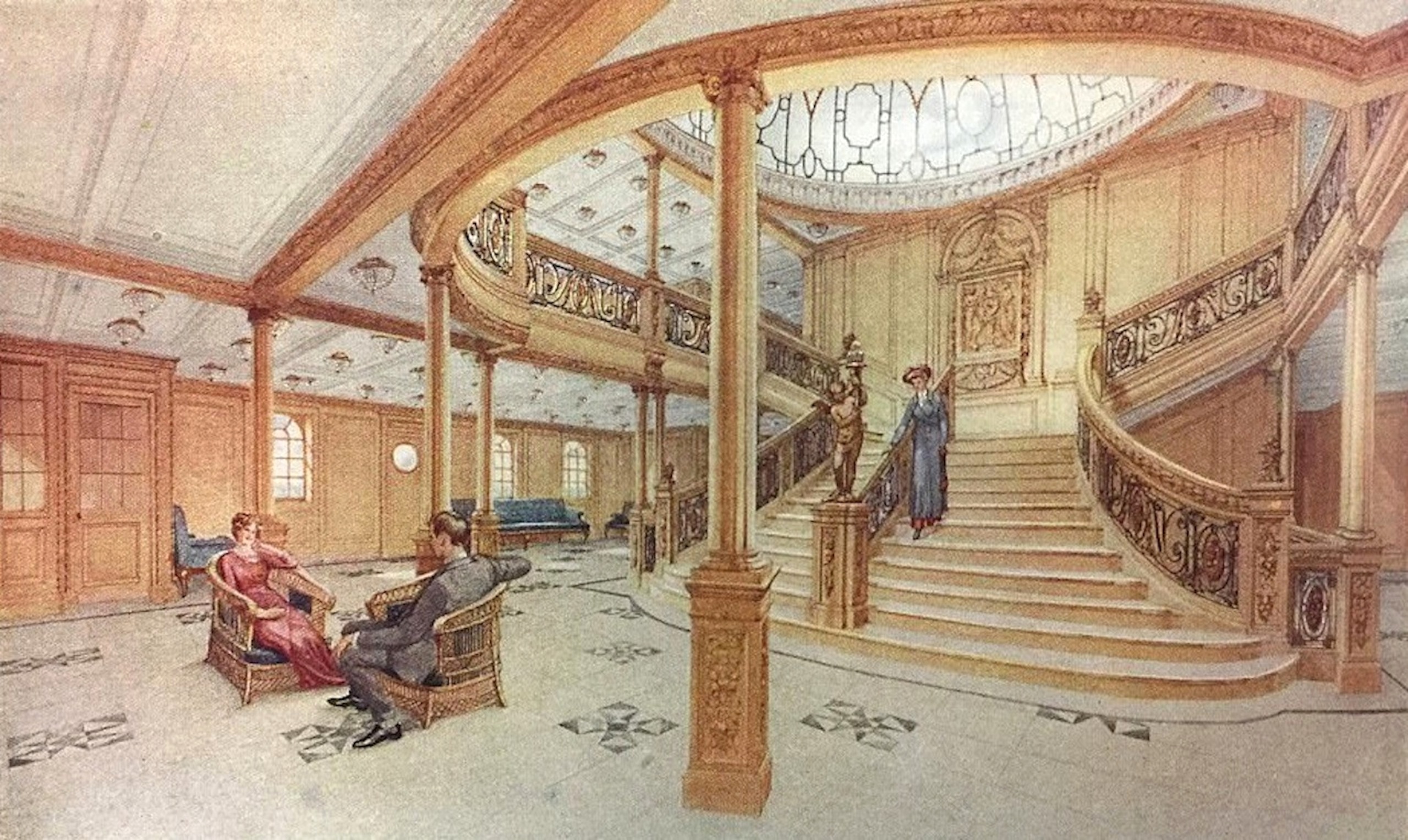
The Grand Staircase
Most iconicIn later Titanic memory, the staircase became almost inseparable from the ship itself. That happened partly because of its design, and partly because images, illustrations, and later film recreations fixed it in public imagination. It is often treated as the room aboard Titanic, even though it was part of a larger suite of spaces and cannot really be understood in isolation. Its role in popular imagination is explored further in how the film shaped Titanic memory.
In later Titanic memory, the staircase became almost inseparable from the ship itself. That happened partly because of its design, and partly because images, illustrations, and later film recreations fixed it in public imagination. It is often treated as the room aboard Titanic, even though it was part of a larger suite of spaces and cannot really be understood in isolation. Its role in popular imagination is explored further in how the film shaped Titanic memory.
- Architecturally central and repeatedly encountered.
- One of the clearest expressions of first-class theatrical luxury aboard.
- Immensely influential in later reconstructions, exhibitions, and films.
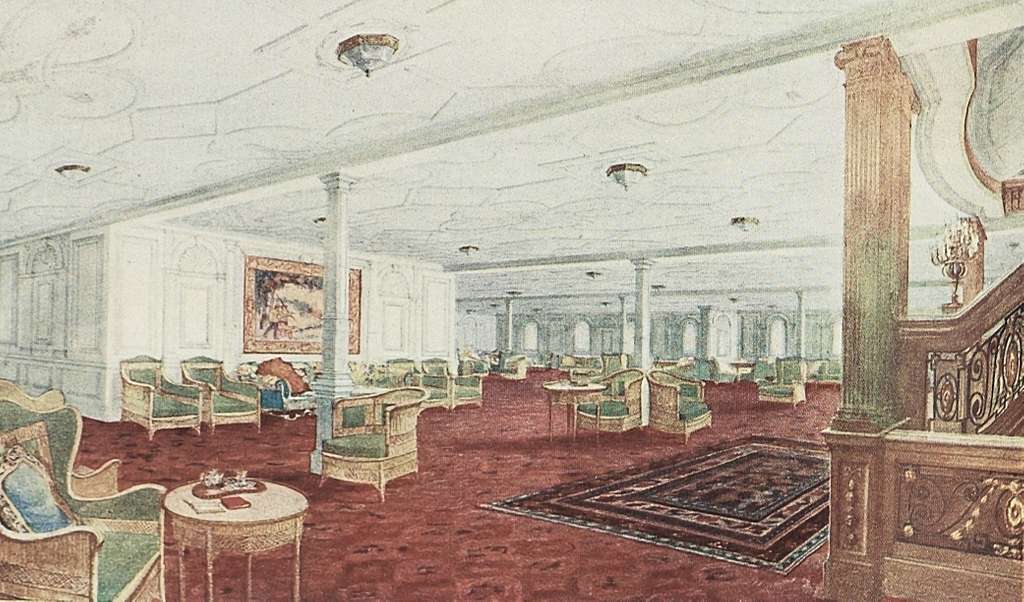
The First-Class Reception Room
Social hubClosely associated with the Grand Staircase and the approach to the Dining Saloon, the First-Class Reception Room was a threshold space: a place for meeting, pausing, and orienting oneself within the formal life of the ship. Its importance lies less in individual spectacle than in how it worked with neighboring interiors to create a coherent first-class environment.
Rooms like this remind us that shipboard luxury was never only about one dazzling set piece. It was also about the transitions between spaces. The Reception Room made the first-class interior world feel continuous, managed, and socially legible.
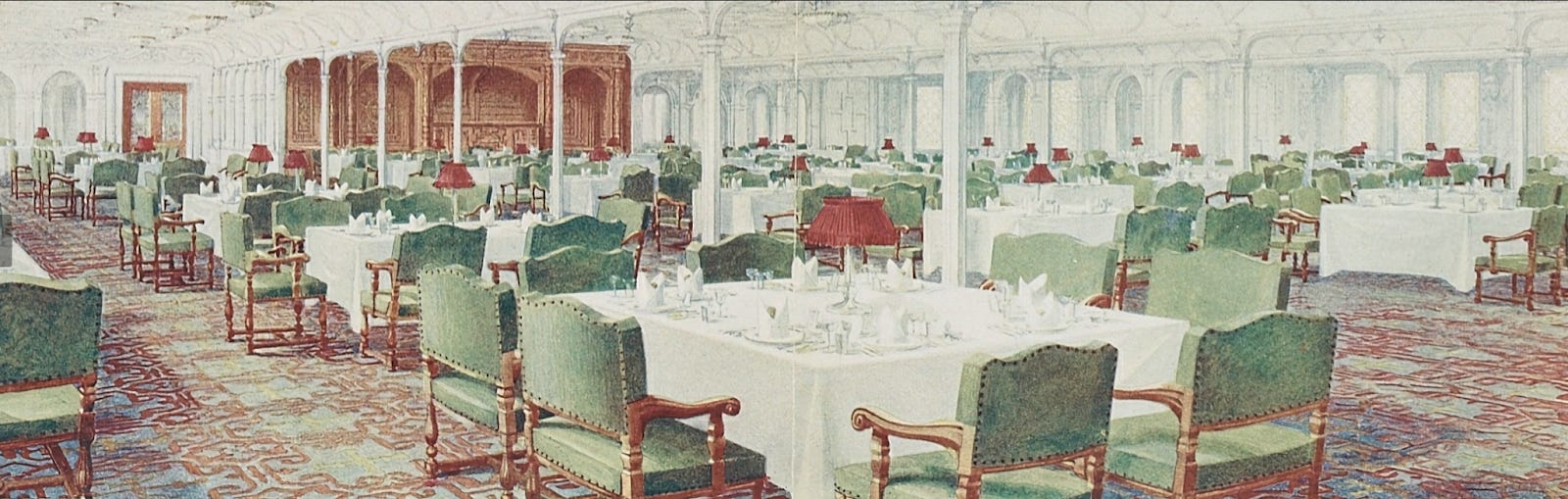
The First-Class Dining Saloon
Large-scale grandeurThe First-Class Dining Saloon was among the largest major public rooms aboard Titanic and one of the clearest examples of how ocean liner luxury depended on organized service at scale. This was not a small private restaurant. It was a major social and operational interior designed to serve many passengers while maintaining an atmosphere of order and refinement.
It tends to be remembered somewhat less romantically than the Grand Staircase or Smoking Room, but it is crucial to understanding Titanic as a working luxury liner. Dining was one of the ship’s most public rituals, and the saloon’s size alone communicated confidence, capacity, and prestige.
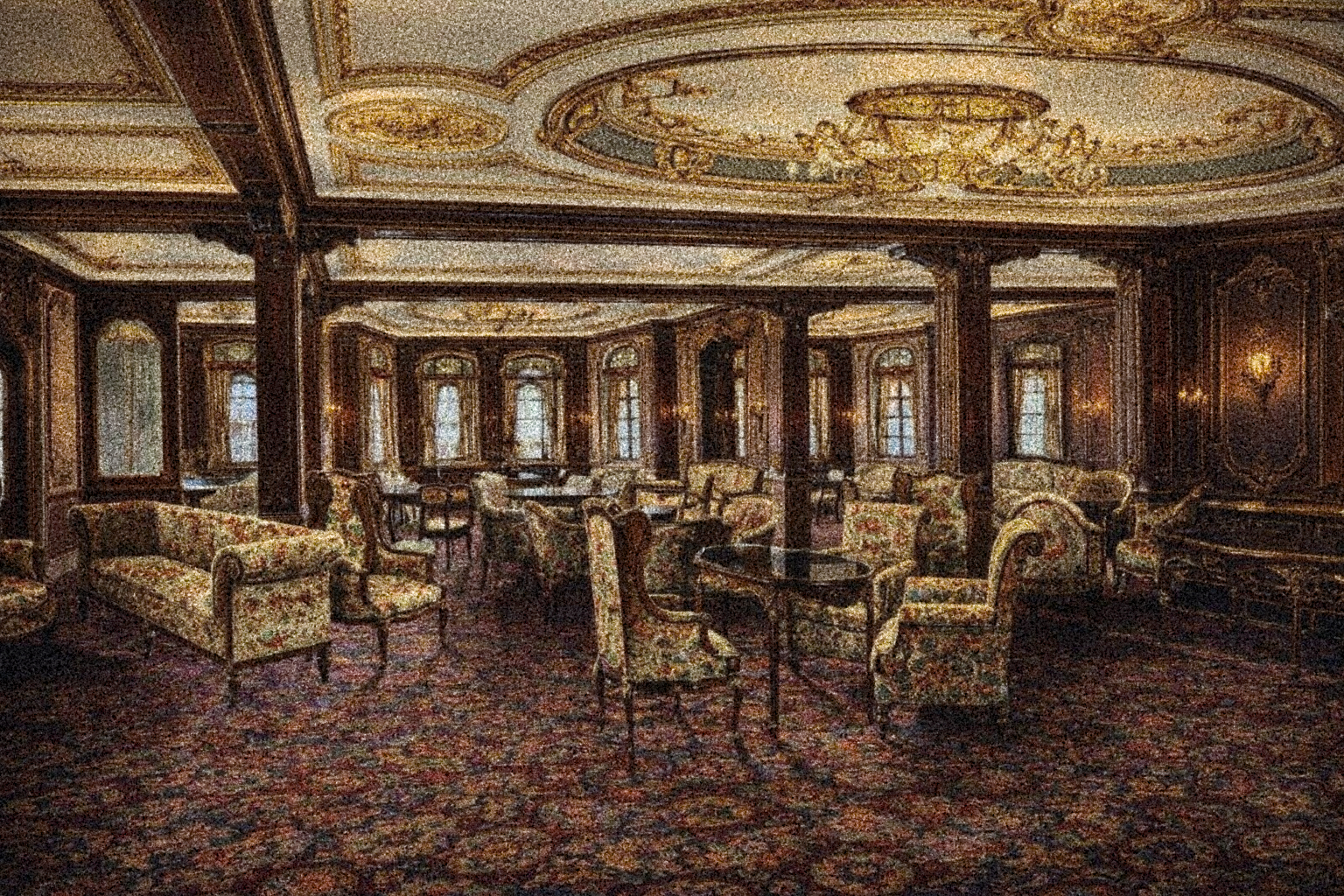
The First-Class Lounge
Cultivated leisureThe First-Class Lounge illustrates a different side of Titanic’s luxury than the staircase does. It was not primarily a room of arrival or spectacle, but of staying. Its importance lies in atmosphere: a carefully furnished place meant to support comfort, ease, and an impression of cultivated life at sea.
When people picture Titanic, they often imagine grand, crowded, glamorous spaces. The Lounge is a useful corrective. It shows that the ship’s prestige also depended on quieter interiors where passengers could settle into long-voyage routines.
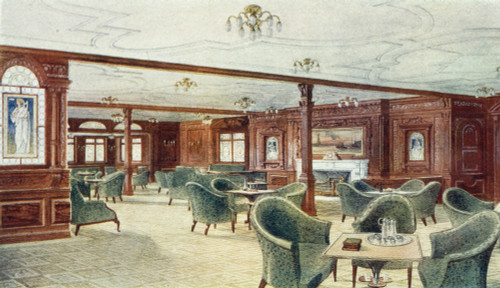
The First-Class Smoking Room
Atmospheric favoriteThe Smoking Room is one of Titanic’s most evocative surviving interior subjects in photographs and reconstructions. It represented a masculine social world styled in a way that recalled private clubs and elite land-based interiors. In contrast with lighter and more open spaces aboard, this room carried a stronger sense of enclosure and atmosphere.
It remains famous partly because it feels so specific. The room conveys not just generic luxury, but a social type: male ritual, after-dinner conversation, cards, tobacco, and Edwardian confidence. That specificity makes it especially powerful in visual memory.
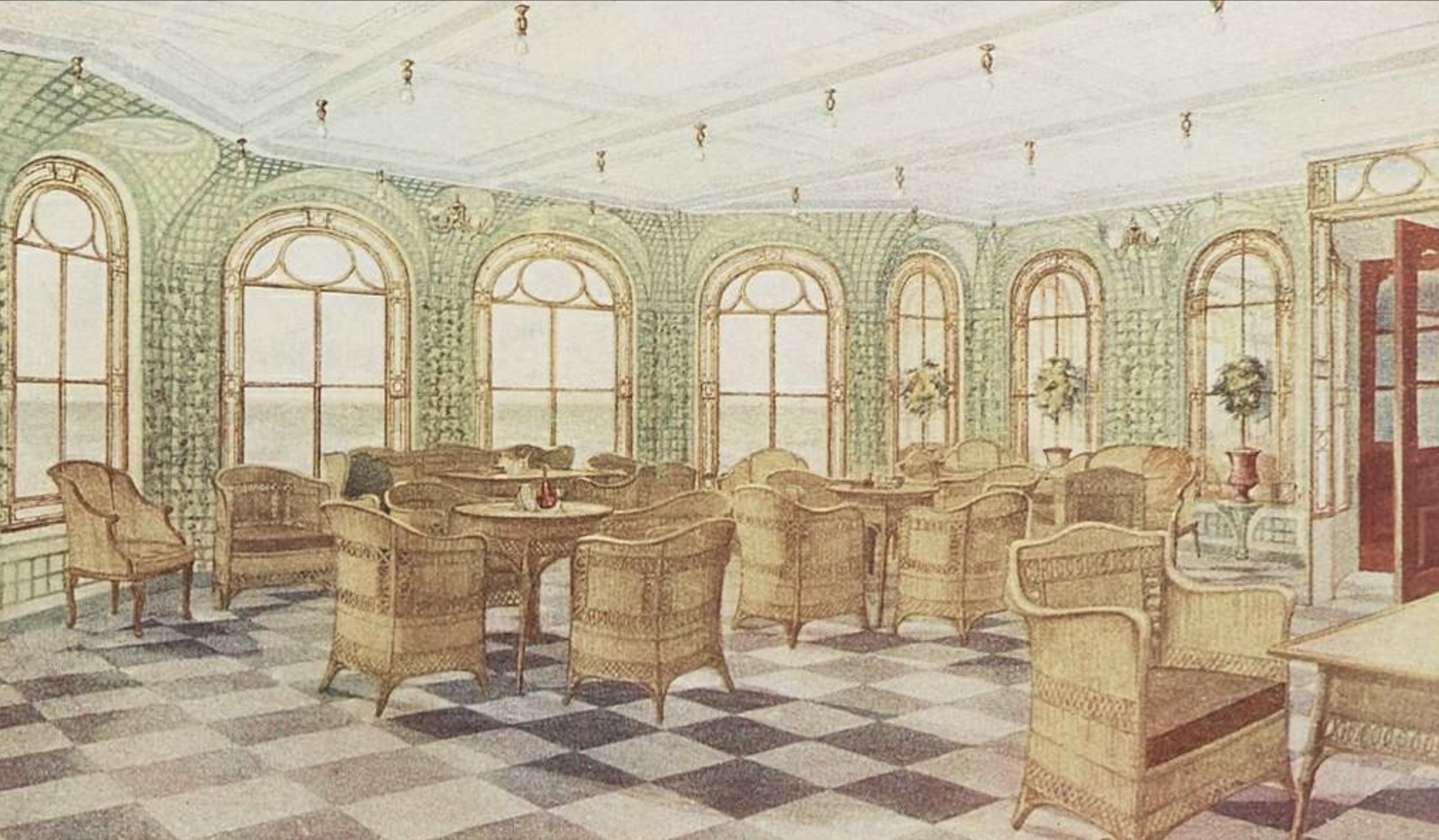
The Palm Court and Verandah Café
Light social eleganceTitanic’s fame sometimes flattens all luxury into one visual register, but the Palm Court and Verandah Café show a more varied interior strategy. These spaces offered lighter, less ceremonious settings than the major saloons. They helped make first class feel not only impressive, but livable and modern.
In interpretive terms, they matter because they show that successful ship design was not about grandeur alone. It was also about rhythm: knowing when to provide formality and when to provide ease.
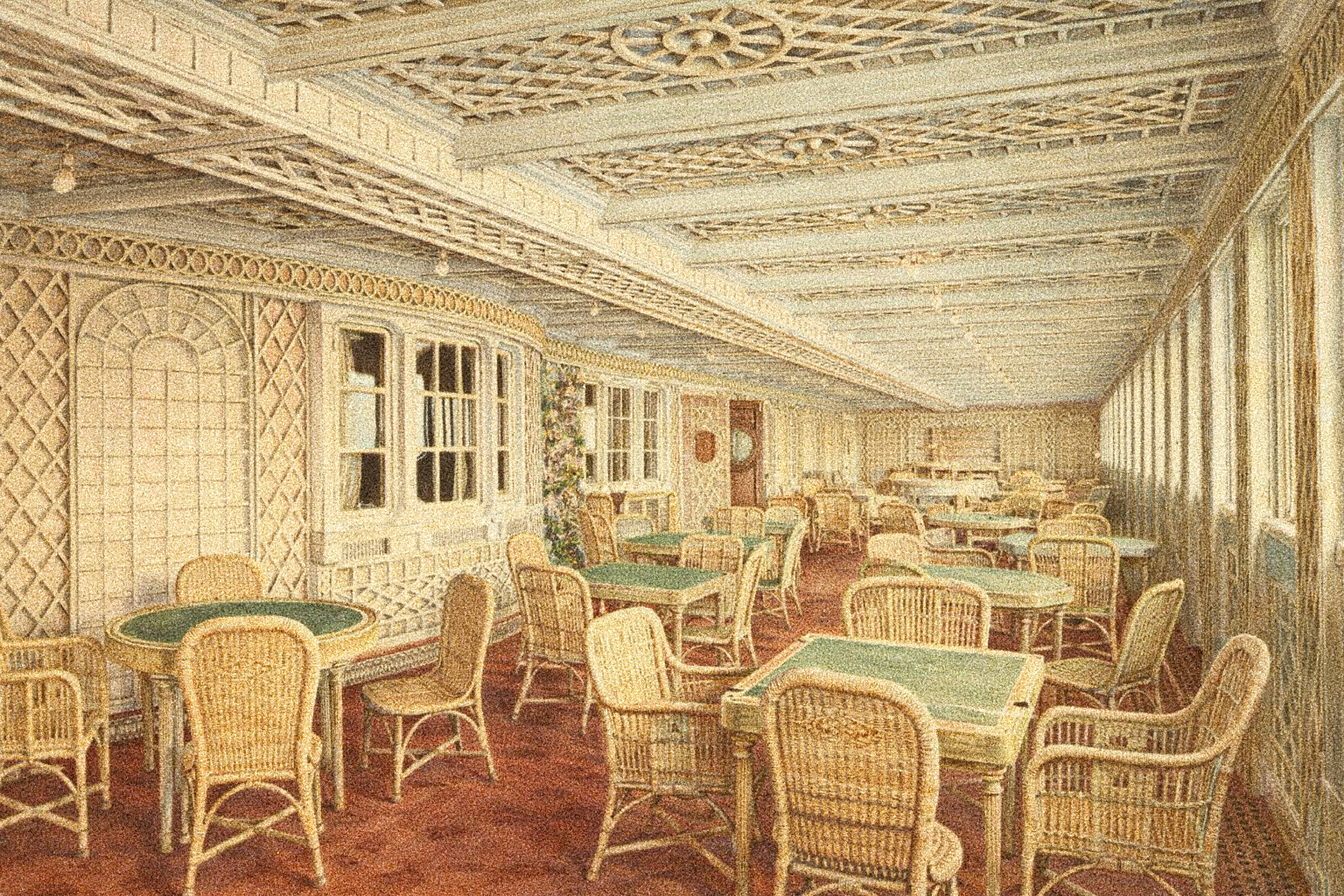
The Café Parisien
Modern noteAmong Titanic’s famous public rooms, the Café Parisien stands out because it does not rely on the same heavy historicist mood as some of the ship’s other interiors. It pointed toward a different social ideal: more relaxed, more urban, more fashionable, and more recognizably modern to contemporary eyes.
That contrast is one reason the room remains so compelling. It reminds us that Titanic was not aesthetically frozen in one style. It balanced tradition with selective modernity, and the Café Parisien is one of the clearest expressions of that balance. Questions of what survives from spaces like this—and how we know them—are explored further in Titanic Artifacts: What Survives and What Doesn’t.
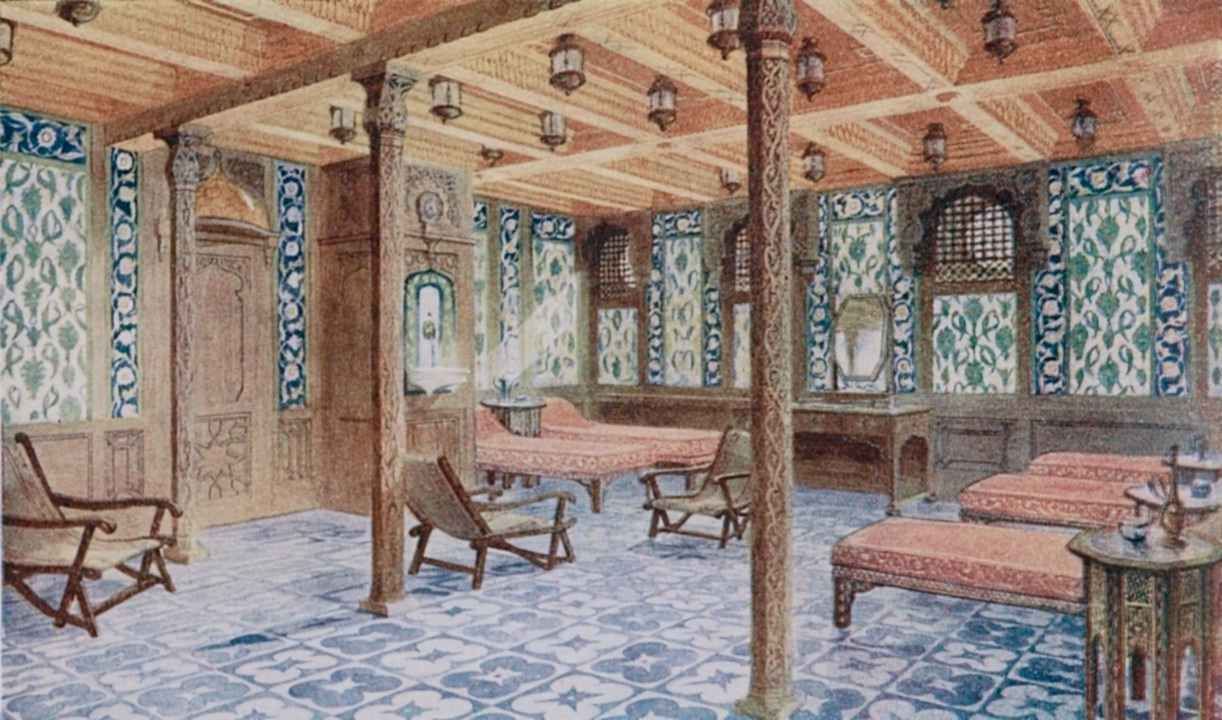
The Turkish Bath Complex
Specialty luxuryTitanic’s Turkish Bath Complex is memorable precisely because it differed from the more familiar sequence of staircases, lounges, and dining rooms. It belonged to a broader culture of elite amenities in which shipping companies offered passengers specialized spaces associated with wellness, novelty, and luxury.
Today the room is also important interpretively because it shows how liners borrowed styles and atmospheres to create experiences that felt transportive even before the voyage itself was complete. It is one of the best examples of Titanic’s interiors being theatrical in a different register.
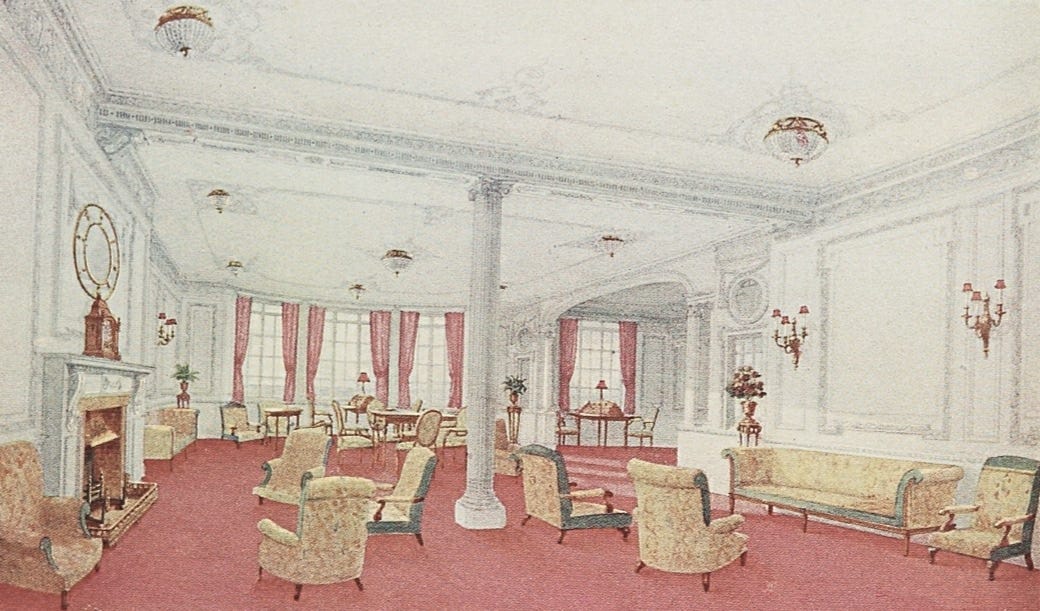
The First-Class Reading and Writing Room
Quiet refinementThis room often receives less headline attention than Titanic’s grandest interiors, but it was an important part of the first-class environment. It served practical needs while also reflecting expectations about comportment, privacy, and long-voyage routine. In a ship devoted to visible luxury, a room like this supplied composure.
It is also useful because it broadens our understanding of what famous interiors can be. Not every notable public room had to overwhelm. Some mattered because they made the ship feel complete.
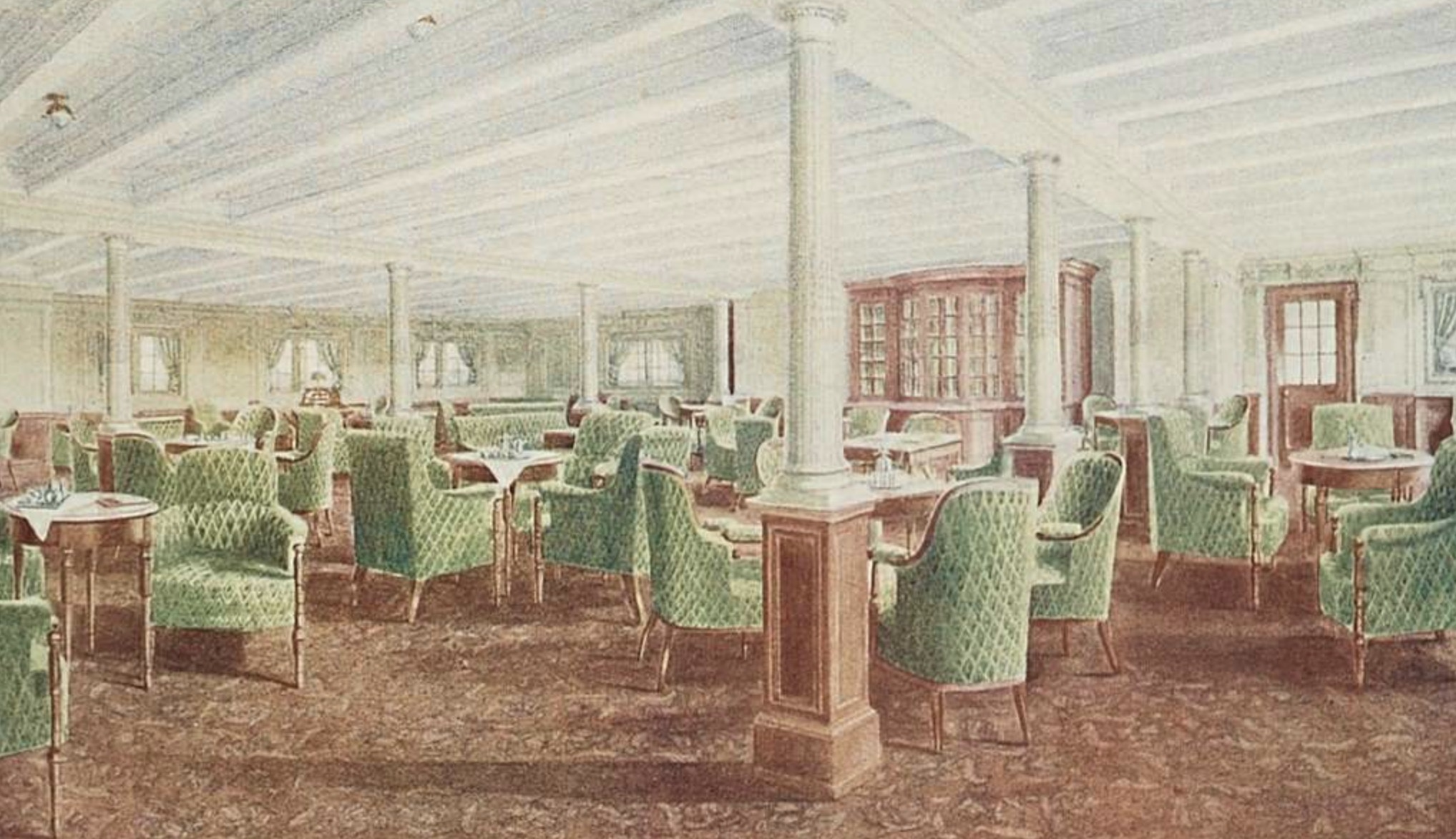
The Second-Class Library
Worth rememberingIf this page focused only on first class, it would reinforce a familiar but incomplete Titanic narrative. The Second-Class Library deserves mention because it shows how strong Titanic’s non-first-class interiors could be by the standards of the era. White Star’s passenger appeal depended partly on making second class feel notably respectable and attractive.
Including this room is a useful reminder that ship prestige was layered. Even when first-class rooms dominated publicity and later fame, the broader interior program helped define the ship’s reputation. That broader social structure also shapes how the disaster unfolded, as seen in the timeline of Titanic’s sinking.
Comparison table: why these rooms stayed famous
| Room | Best remembered for | Type of significance | Why it endures |
|---|---|---|---|
| Grand Staircase | Visual identity and circulation drama | Architectural and symbolic | It became the emblem of Titanic luxury in public memory. |
| Reception Room | Social gathering and transition | Spatial and social | It helps explain how Titanic’s famous interiors worked together. |
| Dining Saloon | Formal service at impressive scale | Operational and ceremonial | It reveals the ship as a functioning luxury system, not only a decorative object. |
| Smoking Room | Atmosphere and masculine club character | Mood and social identity | It is one of the most distinctive and evocative room types aboard. |
| Café Parisien | Fashionable informality | Modern stylistic note | It feels unusually contemporary and therefore especially memorable. |
| Second-Class Library | Breadth of passenger accommodation | Interpretive balance | It broadens the story beyond first-class glamour alone. |
Why Titanic’s rooms still matter
These interiors remain compelling not only because Titanic sank, but because they represent a peak moment in ocean liner self-presentation. They show how shipping companies turned ships into persuasive environments. A public room could communicate class standing, cosmopolitan taste, domestic comfort, masculine ritual, feminine refinement, modernity, or leisure culture. Titanic’s famous rooms survive in memory because they embodied those promises so clearly.
Frequently asked questions
⟡ What was Titanic’s single most famous room?
⟡ Usually the Grand Staircase. It became the ship’s most recognizable interior in popular memory and reconstruction.
⟡ Were all of Titanic’s famous rooms dining rooms?
⟡ No. Some were for dining, some for conversation, some for retreat, and some for leisure or health amenities.
⟡ Why does Café Parisien get so much attention?
⟡ Because it feels unusually modern and fashionable, giving Titanic a more cosmopolitan character than purely formal interiors alone would suggest.
⟡ Why include the Second-Class Library?
⟡ Because Titanic’s interior story is richer when it is not reduced to first-class glamour alone.
⟡ Can reconstructions shape memory too strongly?
⟡ Yes. Titanic is one of the clearest cases where photographs, sister-ship evidence, film, exhibitions, and reconstruction all affect how interiors are imagined today.
Continue Exploring Titanic
Titanic topic hub
Start from a central overview of timelines, questions, and research paths.
TimelineDeparture to rescue
Follow the disaster step by step from sailing to recovery.
InterpretationHistory vs. film
See how Titanic’s most famous scenes were shaped by storytelling.
Research collectionWhat survives from Titanic
Understand how evidence—and loss—shapes what we know today.
Sources & standards
This page distinguishes between rooms that were historically important aboard Titanic and rooms that became especially famous in later public memory. The language stays strongest where a room’s prominence is well established, and more interpretive where fame depends on later retelling, reconstruction, or visual repetition.