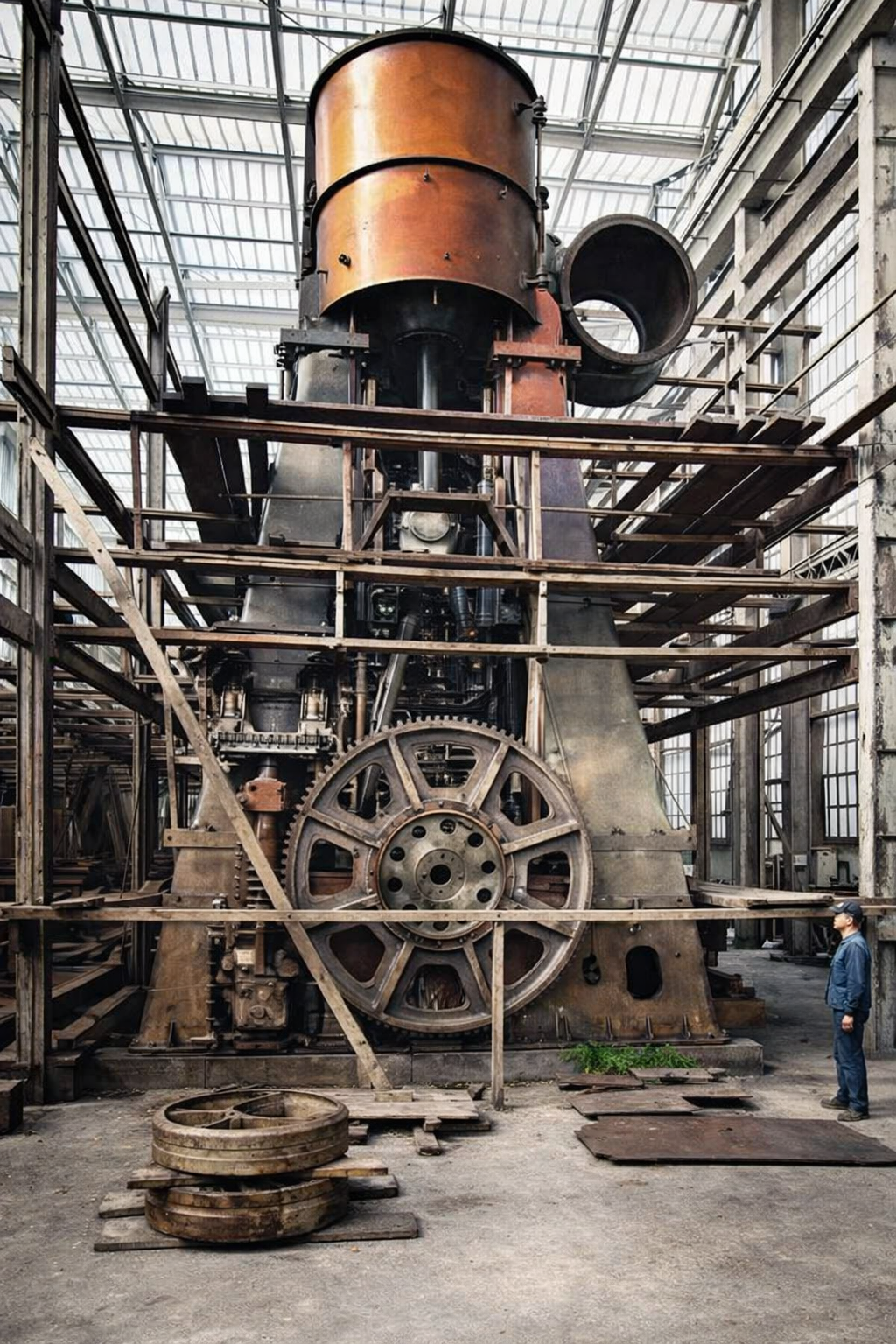
Coal-Fired and Oil-Fired Ocean Liners
The move from coal to oil changed far more than the boiler room. It reshaped bunkering, labor, range, cleanliness, turnaround time, machinery operation, and the economics of ocean liner service.
Basic answer
Why was oil fuel such a major operational change?
Coal had to be loaded, shifted, trimmed, and continuously fed to boilers by large teams of workers. Oil could be pumped aboard, moved through piping, and burned with far less manual fuel handling. It also offered more energy for a given weight and reduced the dirt and disruption associated with coaling.
Operational contrast
What changed aboard and ashore?
Coal
Required bunker gangs, trimmers, firemen, ash handling, extensive storage, and long, dirty fueling operations in port.
Oil
Could be pumped rapidly, reduced manual handling, simplified bunker management, and freed labor for other engineering tasks.
Range and weight
Oil's higher calorific value meant greater energy density, helping ships travel farther for a given fuel weight.
Conversion
Many successful coal-burning liners were later converted rather than immediately replaced, making the transition visible within a single ship's career.
Case studies
Ships across the fuel transition
Selected sources
Where this comparison comes from
Continue the series