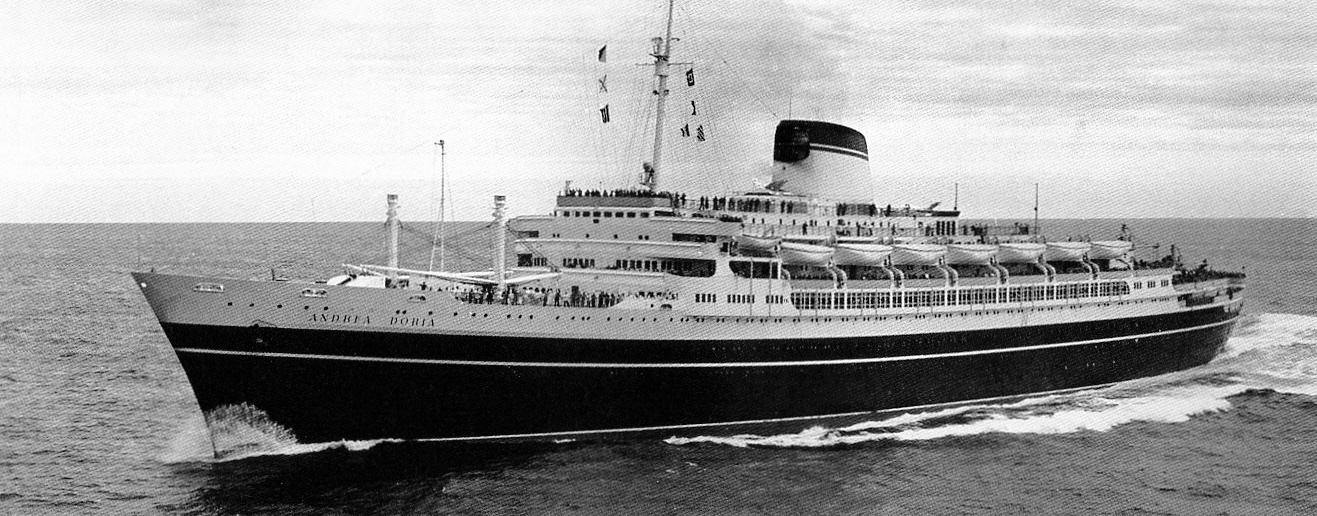
British and Italian Postwar Flagships
After 1945, British and Italian liners both became symbols of recovery and national prestige, but they served different fleet traditions, passenger markets, design cultures, and postwar ambitions.
Basic answer
What did a postwar flagship need to represent?
It had to be commercially useful, but it also carried symbolic weight. Britain emerged from the war with established express-liner traditions and major surviving ships such as Queen Mary and Queen Elizabeth. Italy rebuilt a passenger fleet whose ships—including Andrea Doria and Cristoforo Colombo—became visible symbols of industrial and cultural recovery.
Different postwar positions
Continuity versus reconstruction
Britain
Cunard entered the postwar period with famous surviving tonnage and an established two-ship express system to restore.
Italy
War losses forced a more fundamental rebuilding program, making new ships especially potent symbols of national recovery.
Design identity
Italian liners often foregrounded contemporary art, furniture, and architecture as part of their international image.
Market pressure
Both national fleets faced the same eventual problem: commercial aviation eroded the transportation market faster than prestige alone could replace it.
Case studies
Four postwar expressions of prestige
Selected sources
Where this comparison comes from
Continue the series