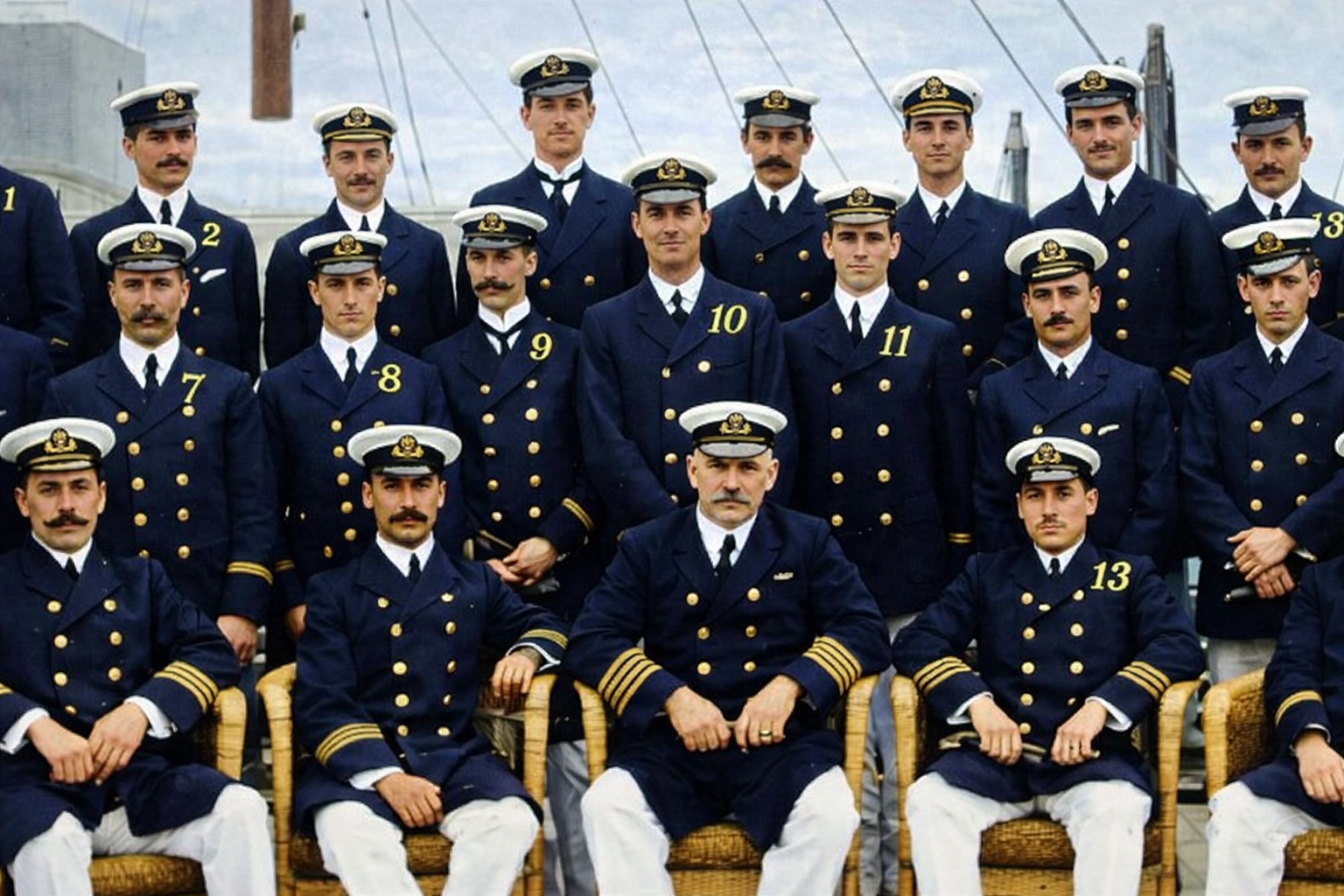
People Behind the Liners
The history of ocean liners is also a history of work: stewards, engineers, firemen, trimmers, pursers, wireless operators, medical staff, musicians, and women whose labor rarely receives the attention given to ships and passengers.
Basic answer
The liner was a workplace before it was a memory
Every famous crossing depended on hundreds of people whose names seldom entered popular history. Some worked where passengers could see them; others spent entire watches in machinery spaces, offices, radio rooms, galleys, hospitals, storerooms, laundries, and crew quarters.
Job titles changed over time, and duties differed between lines, nations, ships, and routes. But the central point remains: the ocean liner was not simply operated by “a crew.” It was a layered labor system made up of specialized departments with sharply different status, risks, hours, and responsibilities.
Seven entry points
Whose work should we notice?
Evidence
Why human history can be harder to recover
Ships left plans, specifications, publicity, and photographs. Workers often survive less evenly in the record. Crew agreements, manifests, payrolls, company files, union material, personal letters, photographs, oral histories, and accident reports can reveal individual lives—but preservation is uneven, and senior officers are usually easier to trace than cleaners, firemen, stewardesses, or temporary musicians.
Selected sources
Where this interpretation comes from
Continue the series