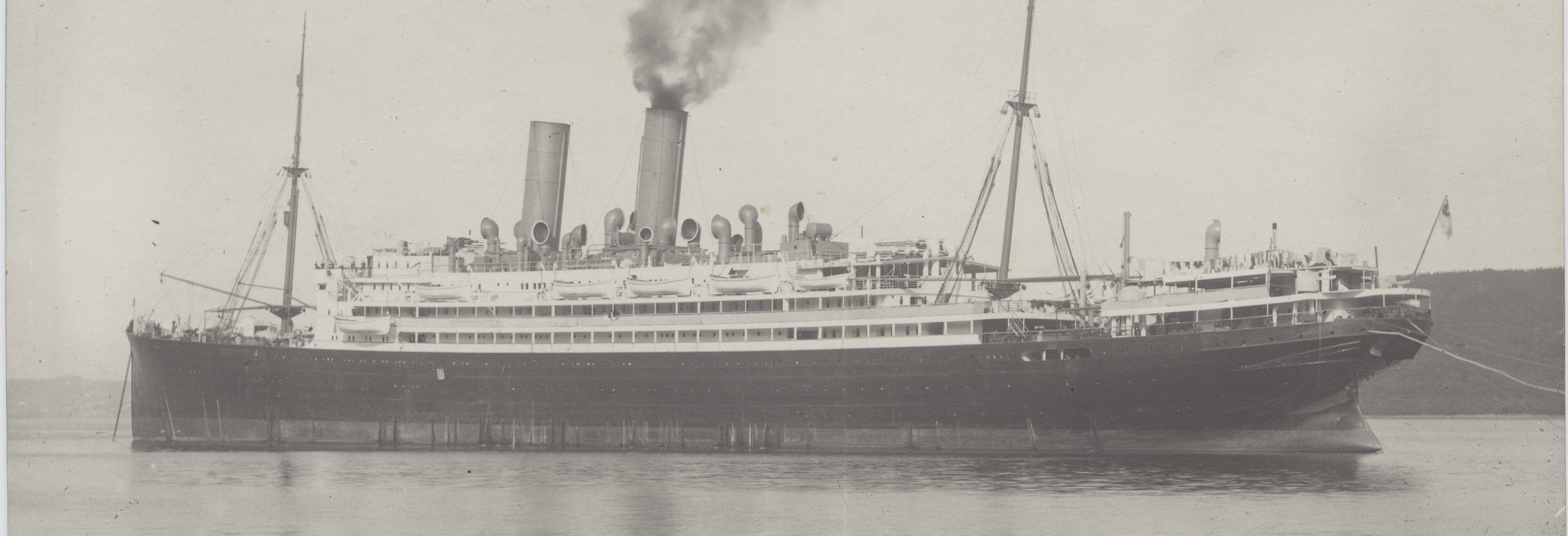
SS Berlin (1909)
Norddeutscher Lloyd · entered service 1909 · Ship Guide
Overview
SS Berlin was a substantial Norddeutscher Lloyd passenger liner built by AG Weser at Bremen and entering service in 1909. She belonged not to the line's celebrated four-funnel express fleet but to the much broader system of practical passenger ships that sustained migration, tourism and ordinary transatlantic commerce.
The earlier version of this guide incorrectly placed her among German liners seized by the United States in 1917. That was not this ship's fate. After the First World War Berlin was ceded to Great Britain as a war reparation and subsequently entered White Star Line service as Arabic. That correction is central to the ship's provenance and must remain explicit.
“Berlin” is also a repeated name in Norddeutscher Lloyd history. This page concerns the 1908-built vessel that entered service in 1909, not the earlier 1868 ship or the later 1925 liner.
Key Facts
A Practical NDL Liner
By 1909 Norddeutscher Lloyd operated far more than its famous express liners. Ships like Berlin carried the bulk of the line's everyday commercial traffic and therefore offer a more representative view of how Atlantic passenger shipping actually worked.
Her enormous third-class capacity is especially important. Roughly 2,700 third-class berths place migration at the center of the design rather than at its margins. In commercial terms, this was a ship built to move large numbers of people efficiently, not merely to project national prestige.
Mediterranean–New York Service
GG Archives' NDL fleet summary identifies Berlin primarily with Mediterranean–New York employment. That route context should be preserved because generic references to Bremen–New York can flatten the ship's actual operating history. Depending on the date, passenger lists and advertisements may reflect southern European embarkation points rather than the classic German North Atlantic route.
This distinction matters for collecting. A document naming Mediterranean ports, a migrant contract, or a passenger list with southern European embarkation patterns may be entirely consistent with Berlin's normal service rather than evidence of an unusual diversion.
First World War and Postwar Transfer
The First World War brought the German commercial phase to an end. Unlike some German liners that were interned and seized in the United States, this Berlin followed a different path. After the war she was surrendered to Britain under the reparation settlement.
Her transfer to White Star Line and renaming as Arabic created a hard provenance boundary. The hull remained the same, but operator, livery, route, passenger market and corporate identity changed. A White Star Arabic object therefore should not be cataloged merely as later NDL Berlin material without acknowledging the new operating identity.
Collecting & Attribution Context
Name ambiguity is the first hazard. “Berlin” appears repeatedly in NDL history, so ship name alone is insufficient. Reliable attribution should combine at least date, operator and route, with photograph configuration or printed company branding as additional anchors where available.
Prewar NDL material can be abundant because the emigrant trade generated large numbers of passenger lists, brochures, tickets and agency documents. Abundance does not make attribution automatic, however. The best cataloging practice is to preserve exactly what the object says and then test that information against the correct ship, date and route.
The later Arabic phase creates a second attribution challenge. Because the ship changed national and corporate identity after the war, later photographs and ephemera may look unrelated to prewar NDL material despite referring to the same underlying vessel. Those records belong to different documentary ecosystems and should remain separately described.
Why Berlin Matters
Berlin is historically useful precisely because she was not one of the famous German express greyhounds. Her passenger mix and route reveal the migration-centered infrastructure that supported the Atlantic system at scale. She also demonstrates how the postwar redistribution of German tonnage could transform a vessel's documentary identity completely.
For an evidence-first archive, the corrected provenance is therefore more than a factual footnote. It changes the entire interpretation of the ship's later history: there is no U.S. transport phase to preserve here; instead, the relevant transition is from NDL Berlin to British-controlled, White Star Arabic.
Evidence-first ship guide