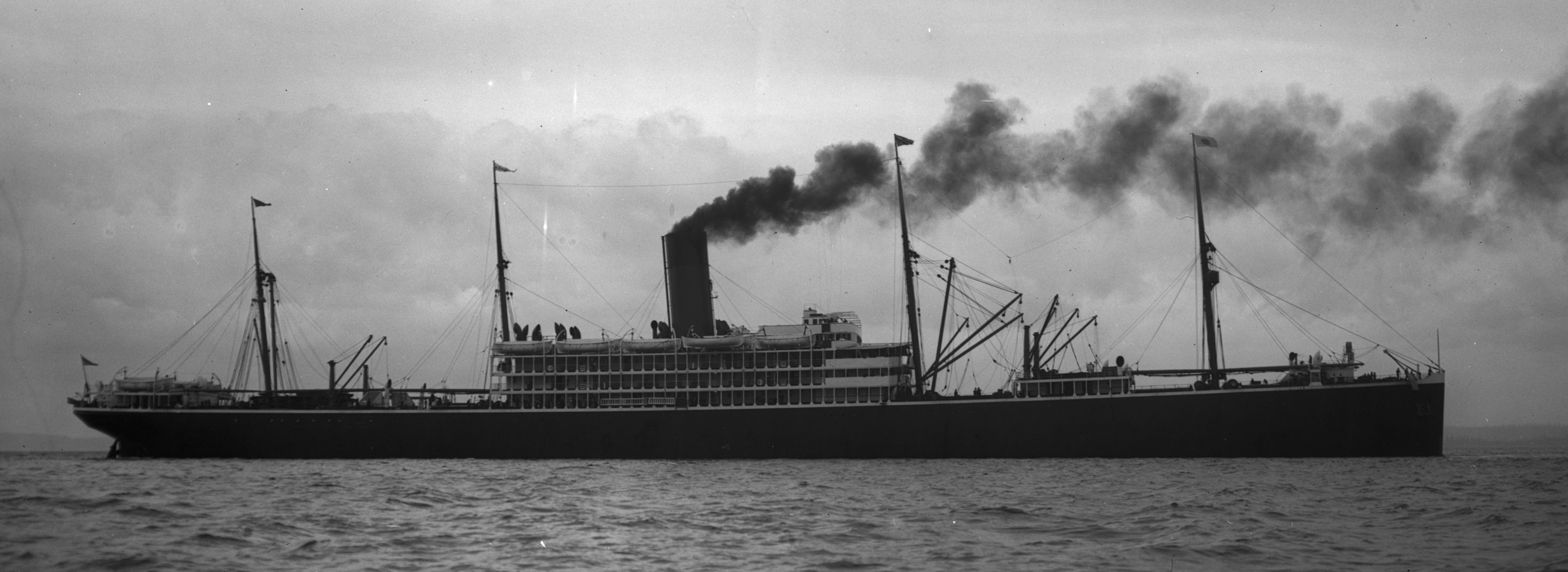
SS Dakota (1905)
Great Northern Steamship Company · Trans-Pacific Service · Ship Guide
Overview
SS Dakota was one of the largest American-built passenger-cargo ships of the early twentieth century, constructed for James J. Hill's Great Northern Steamship Company as the sister of Minnesota. Built by Eastern Shipbuilding at Groton, Connecticut, she entered service in 1905 for the Pacific trade linking the American West Coast with Japan, China, and other Asian ports.
Her career was brief. On 3 March 1907, while approaching Japan, Dakota struck rocks near Nojimazaki. Passengers and crew escaped, but the ship could not be saved. Salvage attempts were abandoned after storms broke the wreck apart later that month.
Key Facts
James J. Hill's Pacific Steamship Experiment
Dakota and Minnesota were part of James J. Hill's attempt to extend his railway empire across the Pacific by sea. The ships were intended to connect Great Northern rail traffic with ports in Japan, China, and beyond, turning the American Northwest into a gateway for Asian commerce.
The project was ambitious. Both ships were exceptionally large for American construction at the time and combined substantial cargo capacity with passenger accommodation across several classes.
American Construction
Dakota was built by Eastern Shipbuilding at Groton, Connecticut, as yard number 2. Her machinery consisted of two large triple-expansion steam engines built by Midvale Steel, driving twin screws.
Her design prioritized cargo-carrying ability and endurance over express speed. At roughly 15 knots, she was not intended to compete with the fastest Atlantic liners; she was built as a large trans-Pacific commercial carrier.
Passenger and Cargo Service
The ship entered service in April 1905. Great Northern's Pacific schedules linked American ports with Japan and China, and company material also advertised calls associated with the broader Pacific network.
Her passenger capacity was heavily weighted toward steerage, reflecting the mixed commercial character of the operation. First- and second-class accommodation existed alongside a much larger low-fare capacity and enormous cargo spaces.
The Final Voyage
Dakota departed the American West Coast in February 1907 on what became her seventh trans-Pacific voyage. She carried passengers and several thousand tons of general cargo.
On 3 March, approaching the Japanese coast near Nojimazaki, Captain Emil Francke brought the ship close inshore while attempting to maintain schedule and reach Yokohama before nightfall. The vessel struck submerged rocks and became firmly stranded.
Inquiry and Loss
The subsequent American inquiry rejected the claim that an unusual current or steering failure was chiefly responsible. Investigators concluded that the ship had been navigated too fast and too close to a coast known for reefs and underwater dangers, without adequate position checks or soundings.
The initial grounding did not immediately destroy the vessel. Divers considered refloating possible, and salvage work began. A gale later in March broke Dakota amidships, ending recovery efforts. The wreck subsequently disintegrated.
Why Dakota Matters
Dakota is significant because she and Minnesota represented an unusually ambitious American-built Pacific liner pair at a time when British and German companies dominated public memory of long-distance passenger shipping.
Her loss also helps explain the commercial difficulties of Great Northern's steamship project. Higher insurance costs and the disappearance of one of the two principal ships weakened the enterprise and placed still greater pressure on Minnesota.
Interpretive Notes
Launch and service dates differ: Dakota was launched in 1904 but entered commercial service in 1905.
Her role was trans-Pacific rather than transatlantic: the ship belongs to the Seattle/West Coast–Asia passenger and cargo story, not the North Atlantic prestige race.
The wreck was a navigational casualty: contemporary inquiry findings placed primary responsibility on navigation decisions rather than on enemy action, severe weather, or proven steering failure.
Evidence-first ship guide