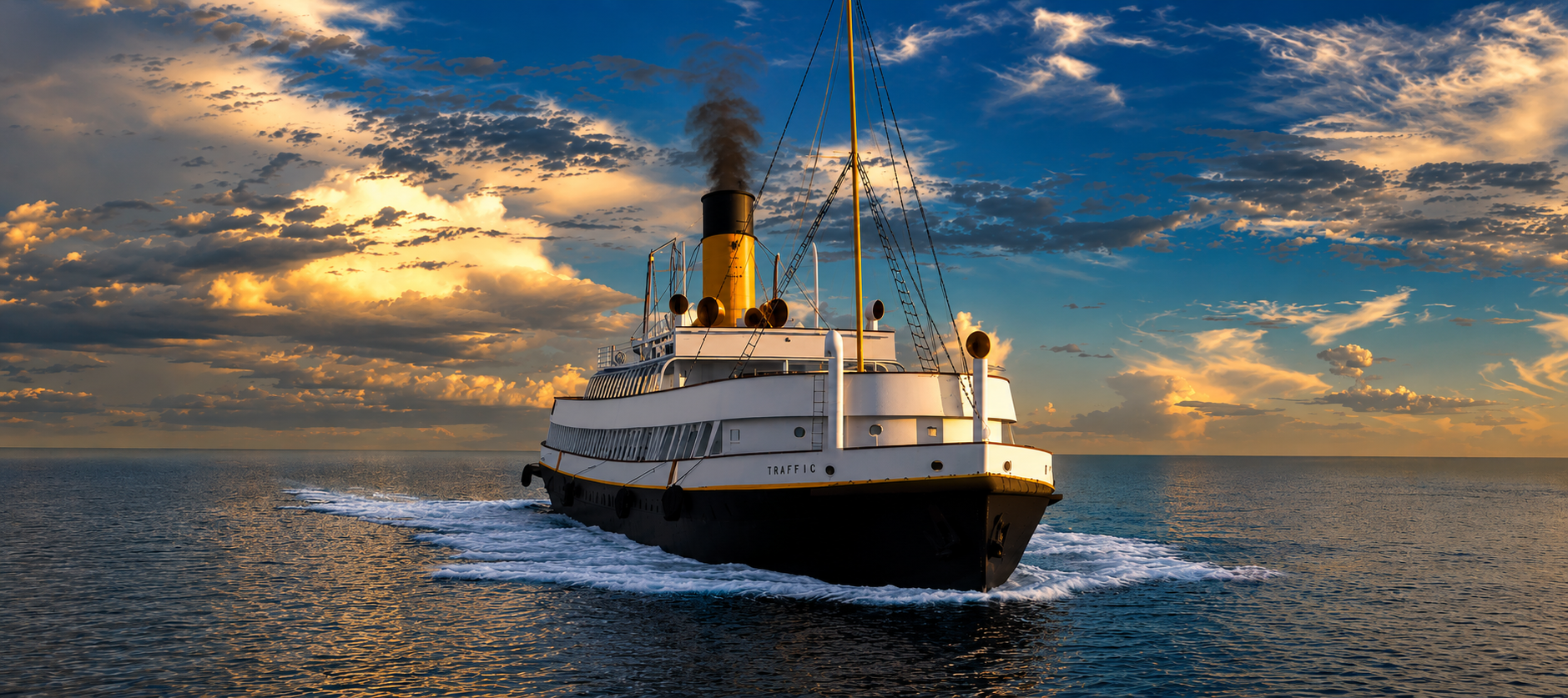
Why Ocean Liners Carried Cargo
Passenger liners were also freight carriers. Cargo, mail, baggage, express goods, and specialized shipments were part of the economics and physical design of scheduled liner service.
Basic answer
Why did a passenger liner need cargo holds?
Because a liner sold transportation, not merely cabins. Passenger fares were one revenue stream among several. Freight filled otherwise valuable carrying capacity and could help make a scheduled voyage economically worthwhile, especially on routes or seasons where passenger demand varied.
Cargo could include manufactured goods, mail, baggage, foodstuffs, refrigerated products, valuable express consignments, automobiles, and other commercial shipments. The mix differed by line, route, port, ship, and period.
Commercial logic
Why freight belonged on a passenger ship
Revenue diversification
Freight reduced dependence on passenger fares alone and made regular schedules easier to sustain.
Route balance
Passenger demand and cargo demand did not always peak in the same direction or season, so a mixed ship could use capacity more effectively.
Speed premium
Fast liners could carry goods for which arrival time mattered, making scheduled service commercially useful beyond passenger transport.
Ship design
Hatches, derricks, holds, refrigeration, baggage rooms, and cargo-handling arrangements were part of the working liner.
At the pier
Cargo shaped the whole turnaround
Cargo had to be booked, documented, brought to the pier, weighed or measured, assigned to holds, stowed safely, and then discharged at the destination without interfering with passenger operations more than necessary. That required stevedores, clerks, customs procedures, cranes or derricks, warehouse space, and careful timing.
Ship case studies
Ships that show different freight roles
Selected sources
Where this interpretation comes from
Continue the series