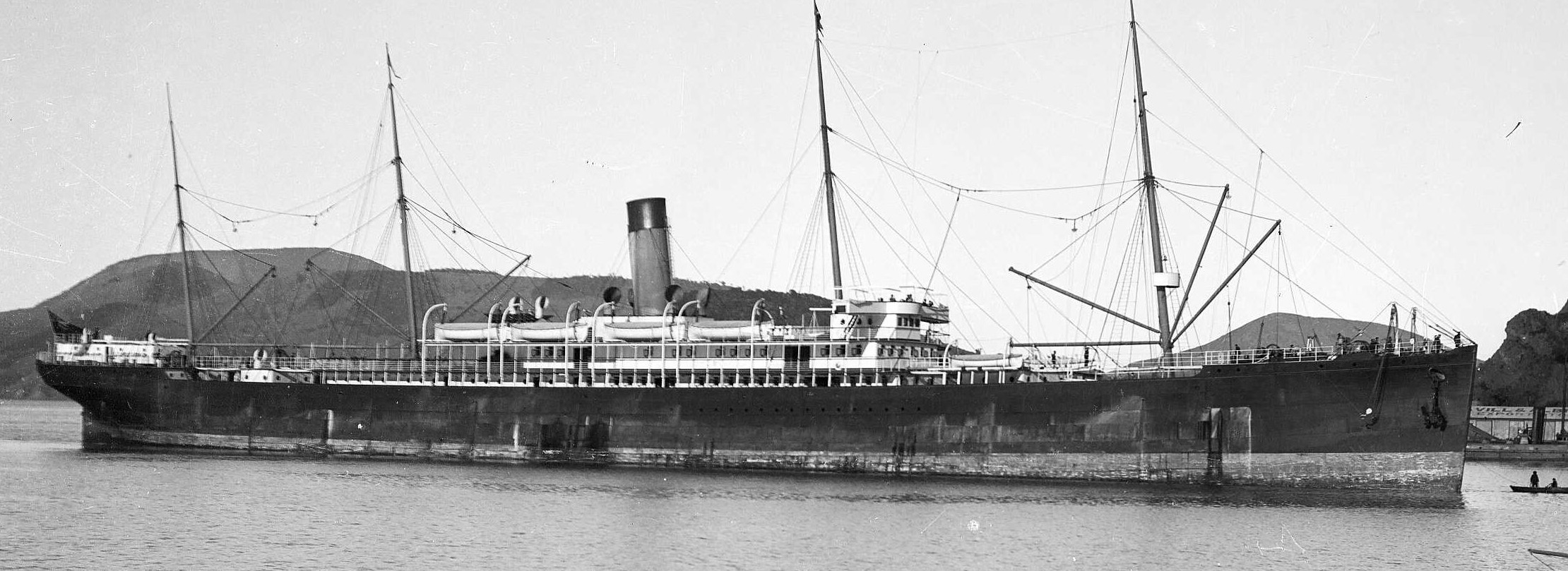
SS Gothic
White Star Line · 1893 · Ship Guide
Overview
SS Gothic was a White Star Line passenger-cargo liner built by Harland & Wolff for the long Britain–New Zealand trade. Launched on 28 June 1893 and completed on 28 November, she began her maiden voyage from London on 28 December 1893, reaching Wellington on 9 February 1894 via Plymouth, Cape Town, and Hobart.
Her later career was unusually fluid. A severe 1906 cargo fire led to an eight-month repair and major refit, after which she moved into Red Star Line service as Gothland. She later alternated between White Star and Red Star control, changing names and routes several times before final retirement in 1925 and scrapping in 1926.
Key Facts
New Zealand Passenger and Refrigerated-Cargo Service
Gothic was built for a route where cargo earning power mattered as much as passenger accommodation. Refrigerated holds linked New Zealand agricultural production with British consumers, while the passenger side of the service supported migration, official travel, and long-distance family movement.
This makes her a particularly useful White Star counterexample to the company’s North Atlantic celebrity image. The economic center of the ship’s work was mixed traffic, not express speed.
The 1893–94 Maiden Voyage
The ship left London on 28 December 1893, called at Plymouth, Cape Town, and Hobart, and reached Wellington on 9 February 1894. Contemporary reports described the voyage as uneventful and noted the ship’s exceptional size for Australasian ports at the time.
For collecting, the maiden-voyage route is a strong provenance framework because the port sequence helps distinguish New Zealand-service material from later Atlantic Gothland records.
The 1906 Fire and Refit
In June 1906 a fire developed in cargo space while Gothic was returning from New Zealand. The fire re-intensified as the ship approached Britain. Passengers were landed at Plymouth, and the vessel was eventually beached and flooded to control the blaze.
Repairs lasted roughly eight months and included substantial passenger-space changes. This is a major configuration breakpoint: pre-1906 plans and capacity figures should not automatically be projected onto the post-repair ship.
Gothland and Red Star Service
After the repair period, the ship moved to Red Star Line service and became Gothland. Her operating geography shifted from the New Zealand trade to European–North American routes such as Antwerp–Philadelphia.
She returned to White Star control as Gothic in 1911, then went back to Red Star as Gothland in 1913. Those repeated changes make operator and year essential cataloging fields.
Grounding, War, and Final Service
In June 1914 Gothland grounded in the Isles of Scilly while carrying passengers. The ship was repaired and later continued irregular wartime service, including voyages associated with relief work.
After the war she underwent further refit and returned to Atlantic immigrant service. A final White Star-linked voyage from Naples to New York occurred in 1921 while she still carried the name Gothland. She remained intermittently active until her final sailing in 1925.
Passenger Capacity After the 1906 Fire
The eight-month repair after the 1906 fire did more than restore damaged spaces. Published summaries indicate that accommodation was reconfigured, with cargo space converted for additional passenger use. This means capacity figures attached to the 1890s ship should not be assumed to describe the later Gothland period.
For deck plans and interior photographs, the fire is therefore a hard provenance breakpoint. Dating an image to “before 1906” or “after the 1906 refit” can be more informative than a generic ship-name label.
Boer War and Relief Context
During 1902, Gothic carried New Zealand troops home from South Africa after the Boer War, adding a military-repatriation episode to an otherwise commercial New Zealand career. During the First World War, later Gothland service included irregular Atlantic voyages and relief-related work.
These episodes should not be allowed to dominate the ship’s biography, but they matter when interpreting military or humanitarian documents that otherwise seem disconnected from a passenger-cargo liner.
Collecting Across Gothic and Gothland
The repeated name and operator changes create an unusually rich but confusing paper trail. White Star material from 1893–1907 belongs to Gothic; Red Star material from 1907–11 belongs to Gothland; White Star restored the name Gothic in 1911; Red Star again used Gothland from 1913. The 1921 White Star voyage under the Gothland name is the notable exception.
For attribution, date, line imprint, route, and ship name must be read together. A postcard marked Gothland can still document a hull originally built for White Star, while an undated “Gothic” item may refer to another ship entirely.
Name Reuse and Later Gothic
The 1893 vessel should not be confused with Shaw, Savill & Albion’s much later Gothic of 1948, which is famous for royal-tour service. Builder, year, operator, and the name Gothland are especially useful discriminators when cataloging photographs or ephemera.
Her long career also demonstrates how one hull could move between imperial cargo service, immigrant transport, relief work, and multiple corporate identities without losing its underlying continuity.
That continuity matters.
Why Gothic Matters
Gothic matters because she combines two overlooked themes: White Star’s New Zealand refrigerated-cargo network and the fluid corporate world of White Star/Red Star transfers within the wider IMM system.
For attribution, date and operator are decisive. “Gothic” generally points to White Star phases; “Gothland” usually points to Red Star service, except for the exceptional 1921 White Star voyage under the later name.
Evidence-first ship guideSources (Selected)
This list is intentionally conservative.