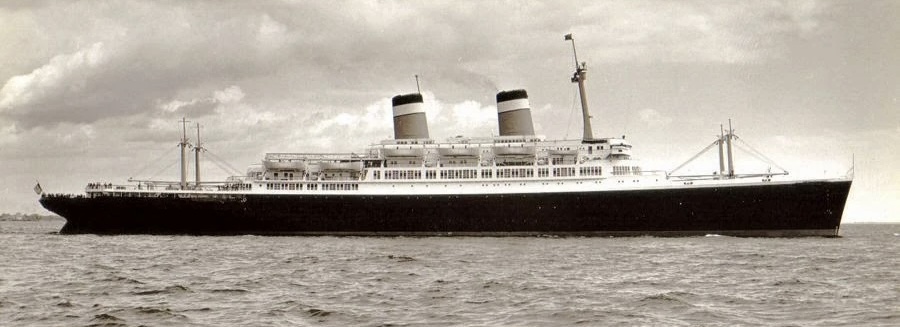
SS Independence
American Export Lines · entered service 1951 · Ship Guide
Overview
SS Independence was a U.S.-built postwar ocean liner constructed by Bethlehem Steel at Quincy, Massachusetts, for American Export Lines. Launched on 3 June 1950 and delivered at the beginning of 1951, she entered passenger service that February. Together with her sister Constitution, she formed the modern core of American Export's New York–Mediterranean passenger operation.
Period American Export publicity presented the sisters as the “Sunliners,” emphasizing modern American living at sea and regular service between New York and Mediterranean ports. GG Archives preserves company-era material describing the pair as completely air-conditioned transatlantic liners serving Algeciras, Cannes, Genoa, and Naples.
Her later career was unusually long. After leaving traditional American Export service, she passed through Asian ownership, returned to the United States for Hawaiian cruising in 1980, and remained a working U.S.-flag passenger ship until 2001. The previous guide's statement that she was scrapped in the “late 2010s” was incorrect: after a protracted final disposal attempt, she was broken up in India around 2010–11.
Key Facts
Published tonnage varies by measurement system and refit date. The American Export fleet reference gives 23,719 gross tons; U.S. shipbuilding summaries also list a lower regulatory GT figure. Use the figure appropriate to the cited source and date.
American Postwar Passenger Design
Independence and Constitution were products of a moment when the United States still invested in large passenger ships as commercial assets, symbols of national design, and strategically useful merchant tonnage. Their modern interiors and extensive air-conditioning contrasted deliberately with the heavier historicist styling associated with many prewar liners.
The Mediterranean route also gave the ships a different identity from the great North Atlantic express liners. Their regular service connected New York with southern European ports and sold the voyage as part transportation, part leisure travel—the “Sunlane” concept promoted sunshine and Mediterranean tourism rather than a race to Southampton or Liverpool.
American Export Lines Service
1951: the inaugural 53-day cruise visited a broad range of Mediterranean ports before Independence settled into regular transatlantic work. Passenger lists and company publicity document calls including Gibraltar, Cannes, Genoa, and Naples.
1950s–1960s: she remained a prominent American Export passenger ship as air travel steadily changed the transatlantic market. The ship's role increasingly blurred scheduled line service and cruise-oriented itineraries, a pattern seen across the postwar passenger fleet.
1969: traditional service ended and Independence entered a period of lay-up, beginning a much more complicated second half of her life.
Oceanic Independence and Hawaii
1974–1976: after sale to C. Y. Tung interests, the vessel became Oceanic Independence and briefly Sea Luck I. She cruised under foreign registry before being laid up in Hong Kong.
1980: after regulatory approval and a major Japanese refit, Oceanic Independence returned to U.S. waters for seven-day inter-island Hawaiian cruising. The ability to operate domestic U.S. itineraries under an American flag became a defining economic advantage because of U.S. coastwise passenger laws.
1982 onward: the ship regained the name Independence. She and Constitution became familiar fixtures in Hawaiian cruising; after Constitution left service, Independence continued alone. Her 1,000th voyage was marked in 1999.
2001: the bankruptcy of American Hawaii Cruises ended active service. Independence was transferred to the U.S. Maritime Administration and laid up at San Francisco.
Final Disposal
Norwegian Cruise Line acquired the laid-up ship in 2003 during the development of its U.S.-flag Hawaii operation, but she was never returned to passenger service. Renamed Oceanic and later Platinum II, the elderly liner eventually left U.S. waters and was sent toward Indian shipbreakers.
The final chapter was disorderly rather than ceremonial. After reaching the Alang area, the ship grounded offshore during the attempted disposal process and was dismantled over 2010–11. For cataloging purposes, “late 2010s” should not be used.
Interpretive Notes
A liner with several legitimate identities: company name, ship name, registry, and date are essential for interpreting later material. Independence, Oceanic Independence, Sea Luck I, Oceanic, and Platinum II refer to phases of the same hull, but not to the same commercial context.
Hawaii is not a footnote: the two-decade Hawaiian career was one of the longest parts of the ship's working life and helps explain why a 1951 liner survived into the twenty-first century.
Modernity is part of the evidence: period advertising stressing air-conditioning, contemporary interiors, and Mediterranean leisure travel helps locate Independence within postwar American consumer culture rather than simply treating her as a smaller echo of prewar liners.
Evidence-first ship guideSources (Selected)
- Ocean Liner Curator — Sources (master bibliography)
- ShipbuildingHistory.com — U.S.-built passenger liners since WWII
- GG Archives — American Export Lines fleet list
- GG Archives — American Export Lines period postcards and route advertising
- GG Archives — SS Independence passenger lists
- Wikipedia — SS Independence, with cited shipping and regulatory references