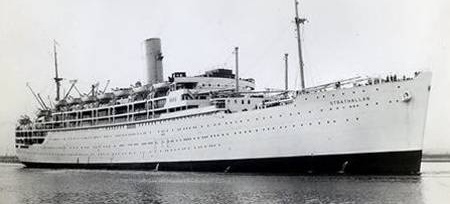
SS Strathallan (1938)
P&O · entered service 1938 · Ship Guide
Overview
SS Strathallan was the fifth and final large P&O Strath liner of the 1930s. Delivered in March 1938, she was built to maintain scheduled passenger links between Britain, India, and Australia, complementing the earlier vessels of the class. Her civilian career was brief: the Second World War transformed her into a troopship within two years of her maiden voyage.
Her loss in December 1942 off the Algerian coast combined a grave wartime maritime incident with an extraordinary mass rescue. Thousands of troops, nurses, and crew were evacuated after the ship was torpedoed; despite the huge number aboard, sixteen deaths are commonly recorded.
Key Facts
Construction and Passenger Service
Launched by Vickers-Armstrongs at Barrow-in-Furness on 23 September 1937, Strathallan was delivered to P&O on 10 March 1938. She departed on her maiden voyage from London to Brisbane on 18 March. Her regular itinerary was part of the company's long Britain–Australia operation through Mediterranean and Indian Ocean ports.
She offered first-class and tourist-class accommodation, with a planned total of 1,011 passengers. Like sister Stratheden, she combined extensive passenger facilities with the commercial demands of scheduled long-distance service. Her first summer also included cruising, an activity distinct from her liner voyages.
The Outbreak of War
Strathallan was requisitioned in February 1940 and adapted for troop transport. Her wartime work included transporting Australian personnel and carrying large troop complements in conditions very different from peacetime passenger service.
In November 1942 she participated in Operation Torch, the Allied landings in North Africa. Her final passage that December formed part of convoy KMF-5, carrying troops, nurses, naval defensive personnel, and crew to the North African theater.
Torpedoed Near Oran
Early on 21 December 1942, the German submarine U-562 torpedoed Strathallan near the Algerian coast, striking the engine-room area. The explosion caused deaths among engine-room personnel and a severe list. Captain John Henry Biggs organized evacuation as the ship's condition deteriorated.
A number of escorting destroyers and other rescue vessels assisted. HMS Verity took aboard nurses and troops; HMS Laforey and the tug Restive participated in efforts to save the hull. The attempt ultimately failed, and the damaged vessel capsized and sank on 22 December.
Rescue, Survival, and Memory
Published accounts report 5,122 people aboard, of whom 5,106 survived. This remarkably high survival proportion should not erase the fatalities, nor obscure the disciplined and difficult rescue conducted at sea.
The photographer and war correspondent Margaret Bourke-White was among those aboard. Her account of the experience, published in Life in February 1943, provides a contemporary personal perspective distinct from operational records, convoy accounts, and later commemorative histories.
Interpretive Notes
Separate the attack and sinking dates. Torpedoed on 21 December, she remained afloat long enough for evacuation and towing before sinking on 22 December 1942.
Compare figures with their sources. Sources vary slightly on tonnage and on the distribution of military and civilian personnel aboard. The commonly reported total of 5,122 and sixteen deaths should retain attribution.
Identify wartime photographs carefully. Grey-painted transport images, crowded decks, and evacuation scenes belong to her wartime phase, not her peacetime P&O passenger configuration.
The rescue involved many vessels. Avoid assigning the evacuation exclusively to one destroyer or tug.
Evidence-first ship guideRelated Guides
Compare RMS Stratheden (1937), SS Strathmore, and SS Strathaird.