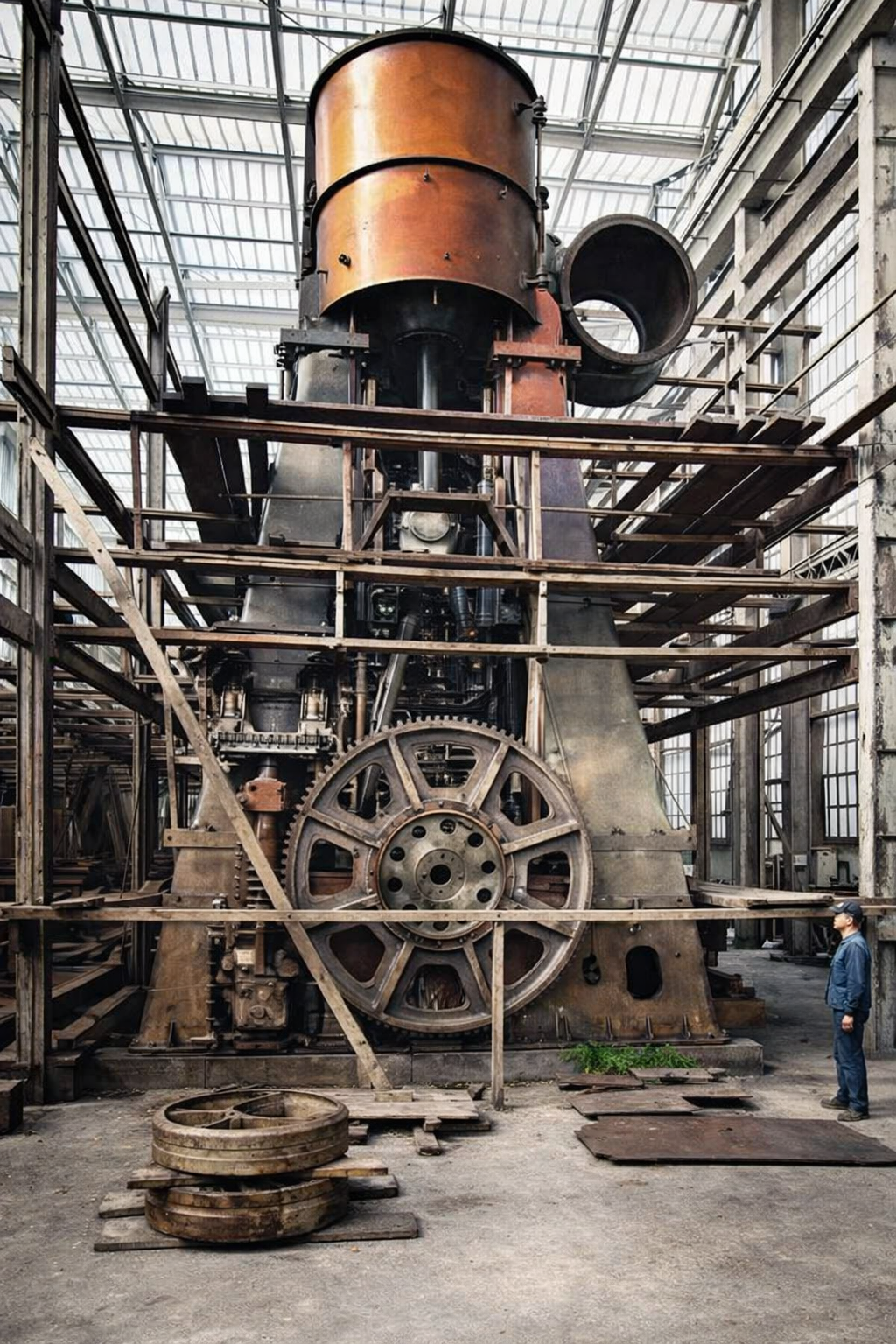
Who Worked in Ocean Liner Engine Rooms?
Engineers, firemen, trimmers, greasers, electricians, and other technical workers kept propulsion, boilers, pumps, generators, ventilation, and auxiliary machinery operating around the clock.
Basic answer
The engine room was a workforce, not a machine
Large liners carried layered engineering departments. Senior engineers supervised machinery and watches; junior engineers and technical ratings maintained systems; firemen tended boiler fires in coal-burning ships; trimmers moved coal from bunkers toward the stokeholds; greasers and oilers tended bearings and machinery; electricians became increasingly important as ships grew more dependent on electrical systems.
Coal era
Firemen and trimmers did punishing physical work
Coal-burning liners required a chain of labor below decks. Trimmers redistributed coal from bunkers; firemen fed furnaces and maintained combustion; engineers watched pressures, machinery, pumps, and the condition of the plant. Heat, dust, noise, vibration, and fatigue were normal parts of the environment.
The transition to oil firing reduced some of the heaviest manual fuel handling, but it did not eliminate the engineering department. It changed its work.
Round-the-clock operation
Watchkeeping never stopped at sea
Propulsion
Engines or turbines had to run reliably for days while speed and machinery condition were monitored.
Electricity
Lighting, elevators, kitchens, communications, pumps, and ventilation increasingly depended on electrical power.
Pumps and auxiliaries
Fresh water, bilge systems, refrigeration, steering support, and other systems required constant technical attention.
Maintenance
A voyage was not a pause between repairs. Machinery was inspected, lubricated, adjusted, and repaired while the ship remained in service.
Ship case studies
Different generations, different engineering labor
Selected sources
Where this interpretation comes from
Continue the series