Why Did Ocean Liners Carry Musicians?
Shipboard musicians were working professionals. They supplied dining-room music, dancing, concerts, background atmosphere, and social structure during days when passengers could not simply leave the venue.
Basic answer
Why was live music part of a crossing?
A multi-day ocean voyage created long stretches of structured leisure. Shipping lines used live music to shape that time: meals, tea, dances, concerts, promenades, religious services, and special events could all involve musicians.
The ensemble size and employment arrangement varied. Some musicians worked through agencies or contractors rather than as ordinary members of the ship's permanent crew.
What musicians did
The work was broader than the evening dance
Dining
Orchestras or smaller ensembles could accompany meals and reinforce the tone shipping lines wanted passengers to associate with service.
Dancing
Ballrooms and lounges depended on musicians who could follow fashionable repertoire and passenger expectations.
Concerts
Formal and informal performances helped fill long sea days and could be organized around charity or special occasions.
Atmosphere
Live music marked time and place aboard: departure, dinner, afternoon tea, Sunday observance, and evening social life.
Memory and myth
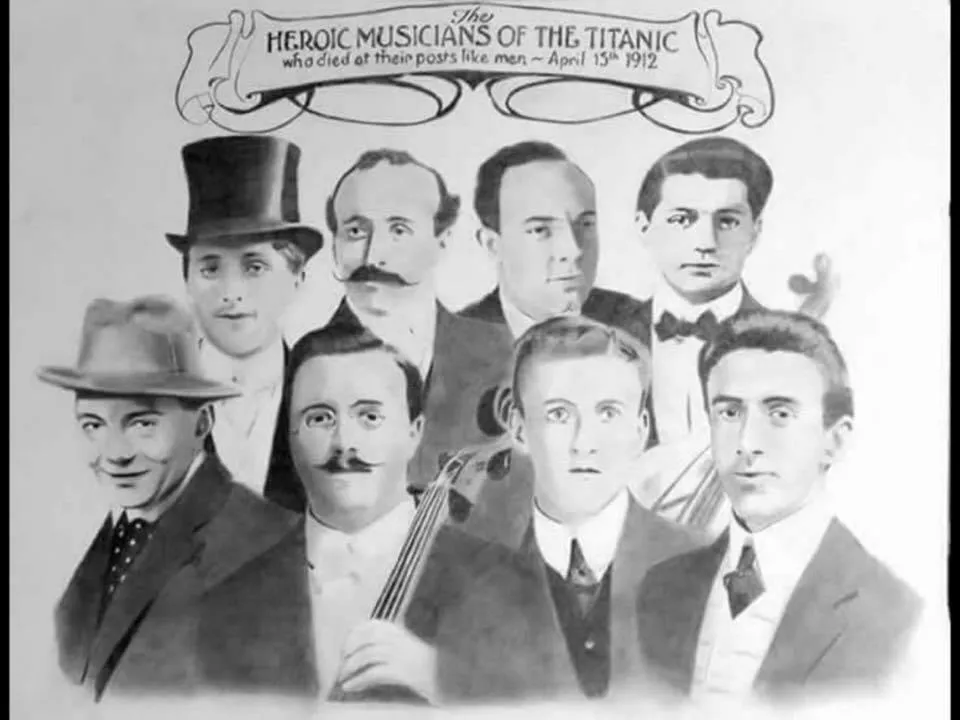
Titanic made liner musicians unusually visible in public memory
The deaths of Titanic's musicians became a major part of the disaster's cultural memory. Contemporary and later accounts agree that the musicians continued playing during the evacuation, although exact claims about their final repertoire are harder to establish with certainty.
The Library of Congress notes how quickly songs commemorating Titanic's musicians appeared after the sinking, helping fix the image of the band in public memory.
Ship case studies
Music as part of the passenger environment
Selected sources
Where this interpretation comes from
Continue the series