How Ocean Liners Were Provisioned
Every crossing began with a logistical operation ashore: food, drinking water, linen, tableware, cleaning supplies, medical stores, beverages, and countless consumables had to be loaded before sailing.
Basic answer
How did a liner feed and supply everyone aboard?
A large ocean liner was a temporary city with no supermarket once it left port. Everything needed for the crossing had to be forecast, ordered, received, inspected, stored, issued, prepared, consumed, cleaned, and accounted for.
Food was only one category. Ships also needed potable water, ice or refrigeration capacity, linens, soap, cleaning materials, galley fuel or electricity, medical supplies, stationery, printed menus, beverages, spare service ware, and consumables for both passengers and crew.
Before departure
Provisioning was a forecasting problem
How many people?
Passenger totals, crew size, class distribution, voyage length, and expected delays all affected quantities.
What would keep?
Dry stores, refrigerated meat, dairy products, fruit, vegetables, bread ingredients, and beverages required different storage conditions.
Where would it fit?
Refrigerated rooms, pantries, bonded stores, wine rooms, galleys, linen rooms, and ordinary storerooms formed an internal logistics network.
Who controlled it?
Pursers, victualling staff, chefs, stewards, storekeepers, and shore suppliers divided responsibility across ordering, custody, preparation, and service.
At sea
The menu depended on hidden infrastructure
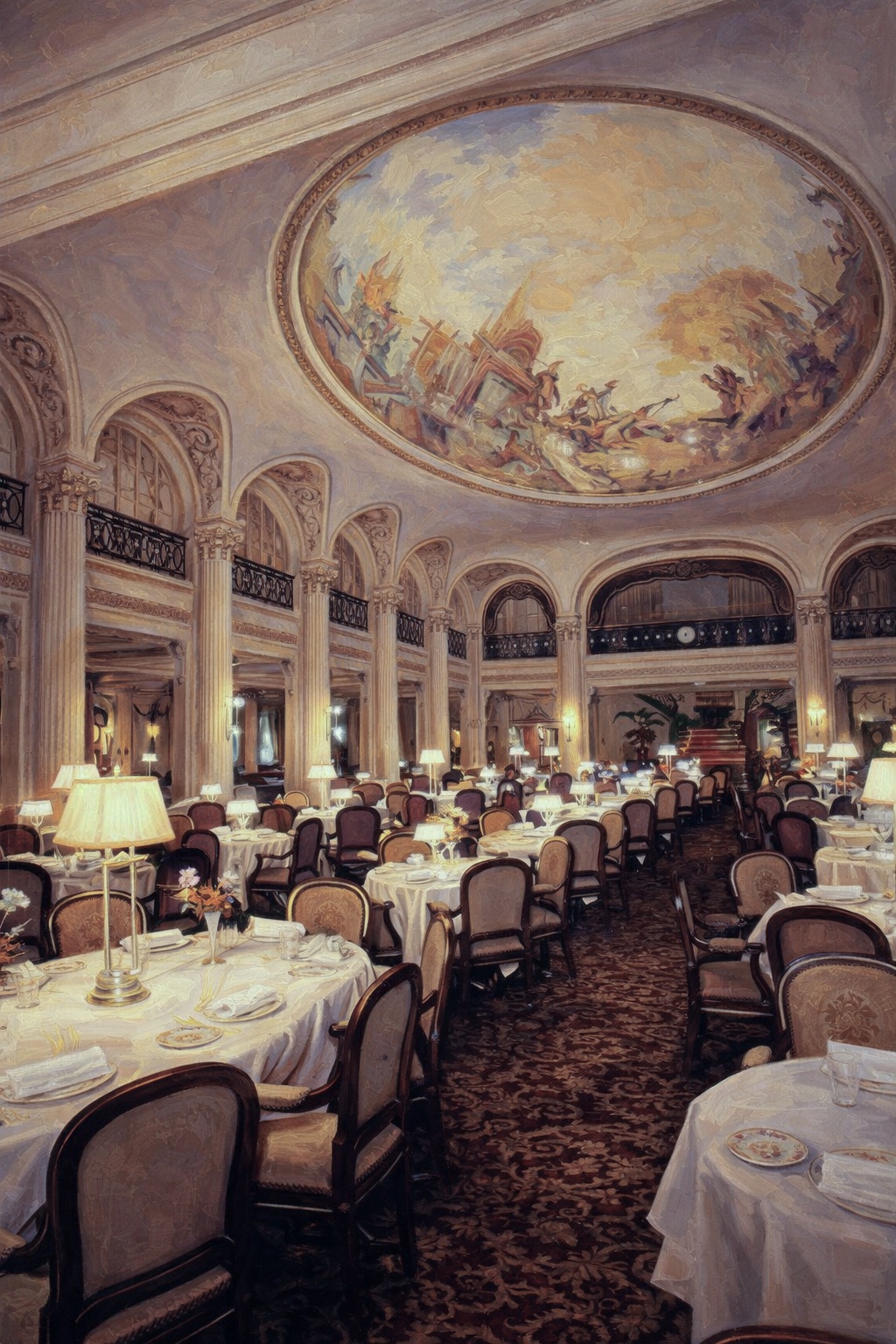
Grand dining rooms could only function because food moved through receiving spaces, cold rooms, butcher and bakery areas, galleys, pantries, lifts, steward stations, sculleries, and dishwashing systems. The polished public ritual of dinner depended on an industrial backstage.
Ship case studies
Scale changed the provisioning problem
Selected sources
Where this interpretation comes from
Continue the series