The passenger entered the line's commercial system
Agents collected identity and travel information needed to sell passage and prepare the voyage.
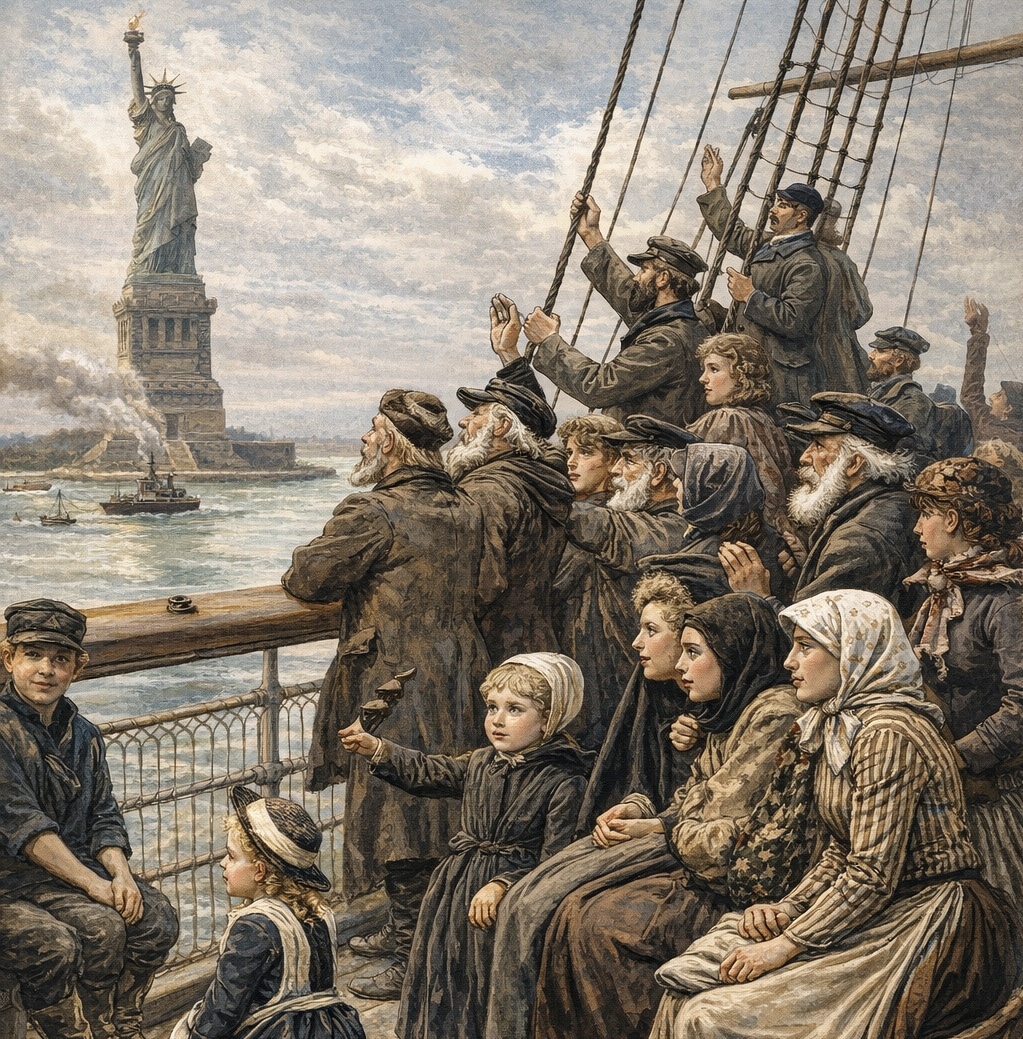
Passenger lists were working documents, not just genealogical records. Booking offices, shipping lines, ship officers, customs officials, and immigration authorities all depended on information that traveled with the passenger.
Basic answer
A manifest was a formal list of people carried on a voyage, but the information it contained depended on the law, period, route, and destination. Passenger details might begin with a booking agent and then be checked, expanded, corrected, or annotated as the traveler moved through embarkation and arrival procedures.
For immigration-era Atlantic travel, these records became especially detailed because governments wanted to know who was arriving, where they came from, where they intended to go, and whether they met legal requirements for entry.
From booking to arrival
Agents collected identity and travel information needed to sell passage and prepare the voyage.
Passenger lists had to reflect who actually sailed, not merely who had purchased a ticket.
Officers and pursers carried documentation needed by authorities at the destination.
Customs and immigration officials used manifests alongside interviews, medical inspection, legal rules, and other evidence.
What manifests can and cannot tell us
Names, ages, occupations, origins, destinations, relatives, ticket class, and other fields can reconstruct migration and family history.
Spelling, handwriting, translation, transcription, self-reporting, clerical mistakes, and later annotations can complicate interpretation.
A list from one decade should not be assumed to contain the same fields or serve the same legal purpose as a list from another.
Similar names, repeated ship names, transfers between lines, and variant spellings can cause genealogical misidentification.
Immigration inspection
At major immigrant ports, arrival procedures could include medical inspection, legal questioning, customs examination, detention, transfer to immigration stations, or onward rail travel. The ship delivered people into a bureaucratic system that extended far beyond the pier.
Ship case studies
Selected sources
Continue the series