Passengers, baggage, mail, and cargo came off
Disembarkation happened alongside customs, immigration, baggage handling, mail transfer, and freight discharge.
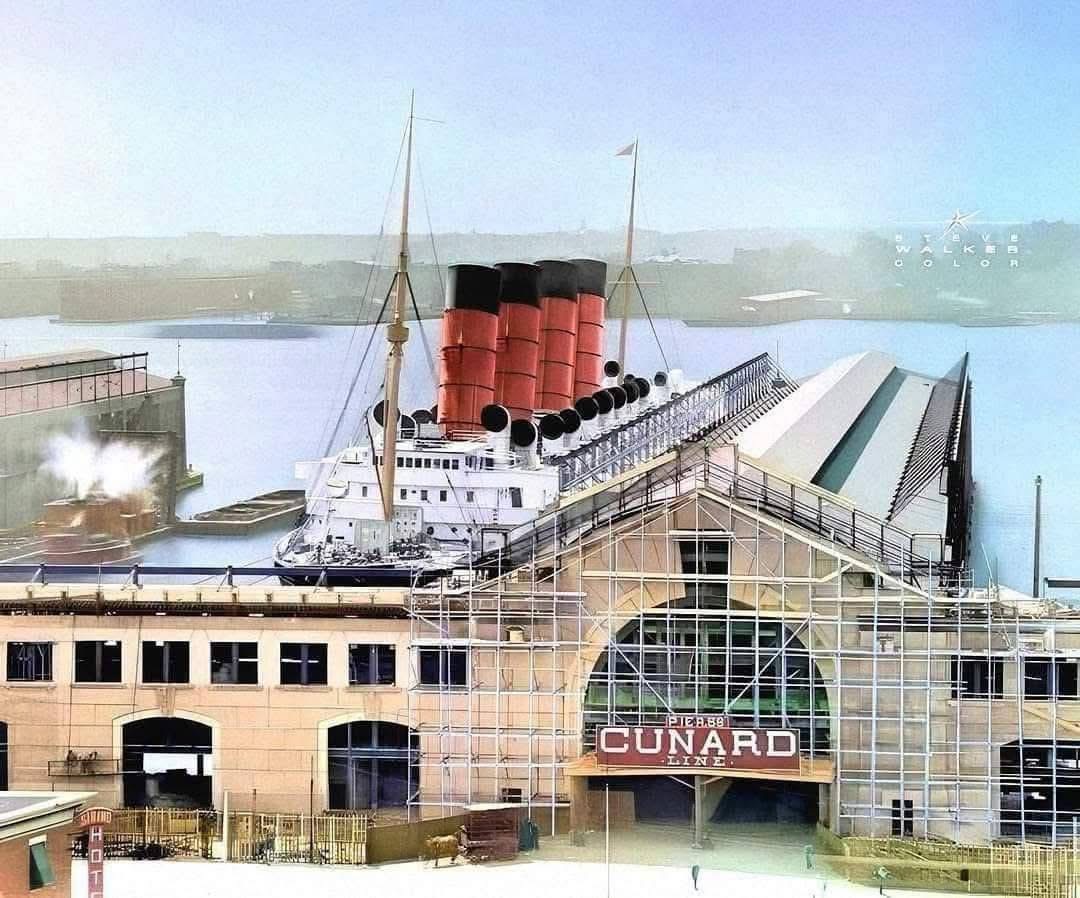
Between arrival and the next sailing, an ocean liner had to be transformed from a just-finished voyage into a ready-to-depart ship: passengers off, cargo out, cabins cleaned, stores loaded, machinery serviced, and paperwork reset.
Basic answer
Arrival did not mean rest. For a scheduled liner, the clock immediately started on the next voyage. Passengers and baggage had to leave, mail and cargo had to be discharged, customs and immigration formalities completed, cabins and public rooms cleaned, stores replenished, machinery inspected, repairs made, and new passengers, baggage, mail, and freight brought aboard.
The sequence
Disembarkation happened alongside customs, immigration, baggage handling, mail transfer, and freight discharge.
Cabins were stripped and remade, public rooms cleaned, linen exchanged, stores counted, and service areas prepared.
Routine work, repairs, bunkering, water loading, waste removal, and technical checks had to fit inside the port window.
New cargo, mail, baggage, passengers, provisions, and documents came aboard until the ship was again ready to sail.
Why schedules mattered
The advertised departure linked the liner to rail connections, passenger plans, mail schedules, tugs, pilots, tides, berth availability, and the next port. Turnaround therefore rewarded organization as much as speed at sea.
Reset passenger spaces rapidly enough to receive another complement.
Worked cargo and baggage through hatches, cranes, sheds, and holds.
Used the port window for inspection, servicing, fuel, water, and maintenance.
Handled tickets, manifests, customs documents, mail, cargo paperwork, and last-minute changes.
Ship case studies
Selected sources
Continue the series