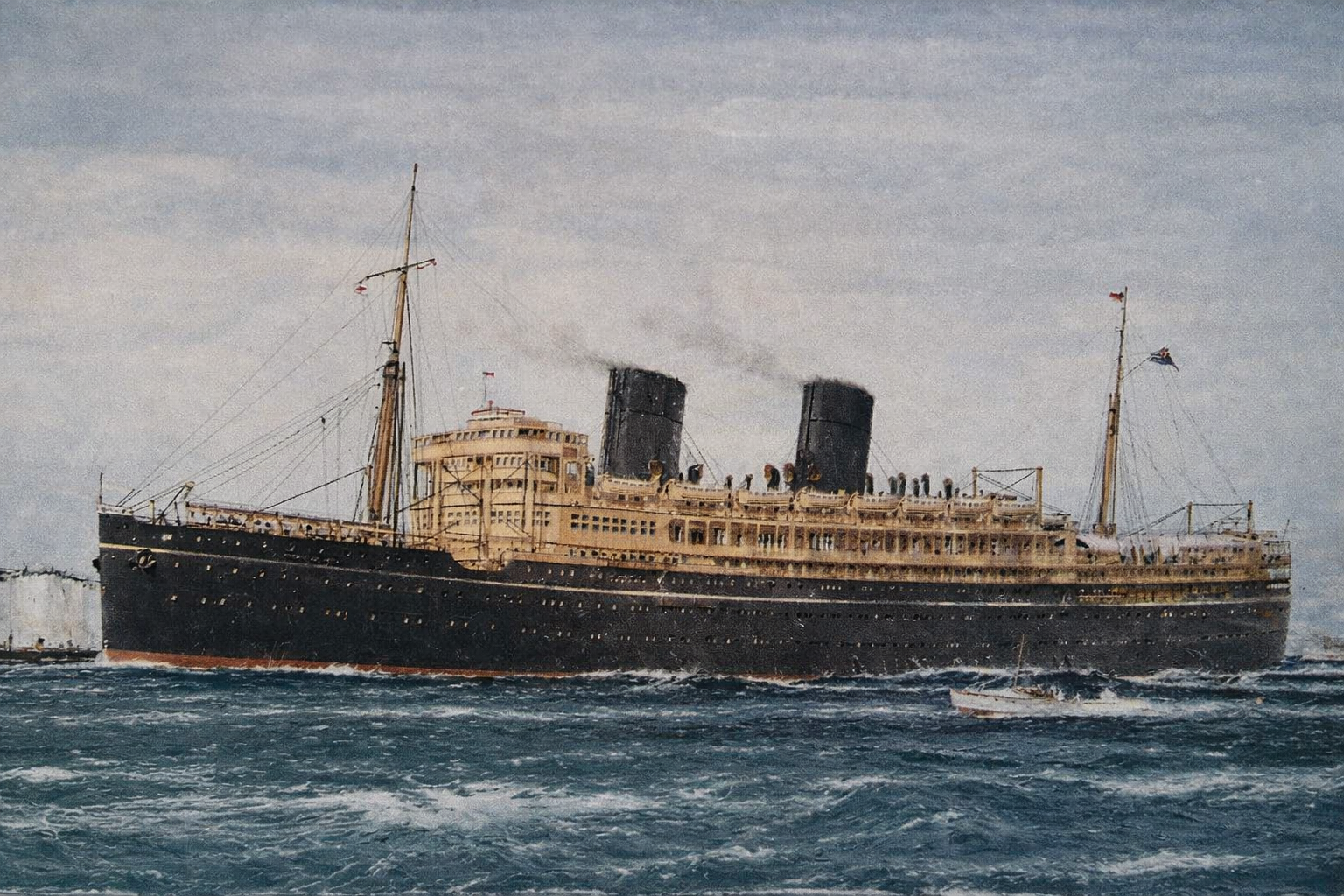
North Atlantic and South Atlantic Liner Routes
North Atlantic and South Atlantic liners were both scheduled passenger ships, but geography, migration patterns, port networks, voyage length, seasonality, and passenger demand produced very different operating worlds.
Basic answer
Was every Atlantic liner business essentially the same?
No. The North Atlantic developed an unusually dense express system between major European ports and New York, supported by mail, migration, business travel, tourism, and intense competition. South Atlantic routes to Brazil, Uruguay, and Argentina were longer and often served a more dispersed chain of ports, with especially strong links to migration and mixed passenger-cargo traffic.
Route logic
What changed when the route changed?
North Atlantic
Shorter crossings, dense competition, major mail flows, repeated departures, and the New York market encouraged express scheduling and highly visible flagship rivalry.
South Atlantic
Longer voyages and multiple calls made endurance, cargo, migrant capacity, and flexibility especially important.
Passenger demand
Both systems carried migrants and wealthy travelers, but the balance of classes and the direction of migration varied by route and period.
Public memory
North Atlantic flagships dominate popular liner history, which can obscure equally important South Atlantic networks.
Case studies
Ships shaped by their routes
Selected sources
Where this comparison comes from
Continue the series