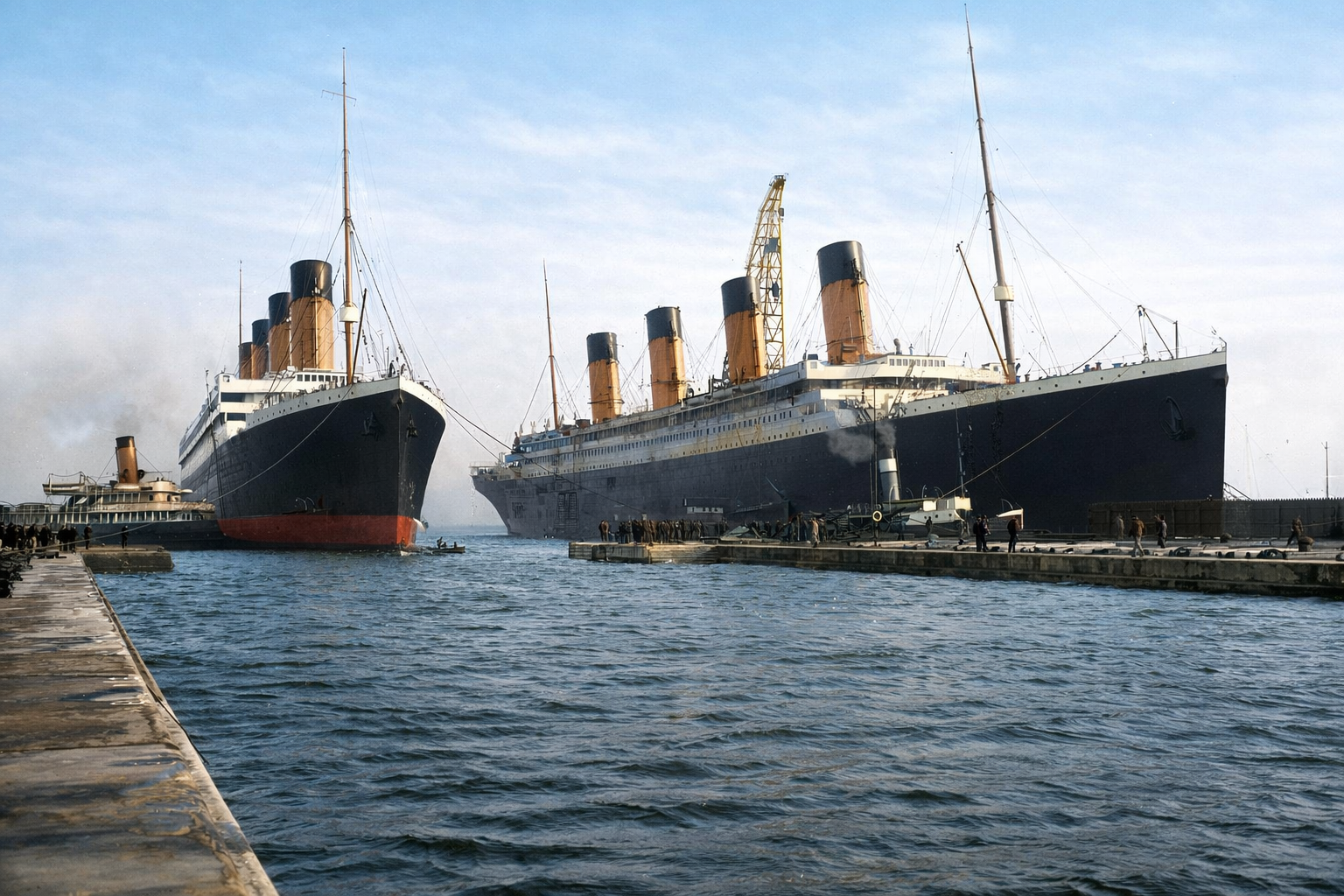
Standardized Sister Ships and Revised Sisters
Sister ships shared a common design, but they were rarely exact duplicates. Operating experience, regulation, passenger demand, and yard practice could reshape later sisters before or after delivery.
Basic answer
How identical were sister ships?
Usually less identical than the word “sister” suggests. Sharing a hull form, machinery concept, and class identity could save design time and construction cost, but later ships often incorporated lessons from the lead vessel, changes in passenger expectations, revised regulations, or company preferences.
Why designs changed
Experience could outrun the original plans
Standardization
Common machinery, dimensions, fittings, and construction methods simplified purchasing, training, maintenance, and fleet operation.
Revision
Later sisters could receive altered promenade arrangements, cabins, public rooms, safety features, or technical equipment.
Refits
Even ships delivered alike could diverge substantially after years of rebuilds and changing commercial use.
Historical caution
A photograph, plan, or fitting from one sister should not automatically be attributed to another merely because the ships belonged to the same class.
Case studies
Where the differences become visible
Selected sources
Where this comparison comes from
Continue the series