Compagnie Générale Maritime
The Pereire brothers establish the company that would become CGT.
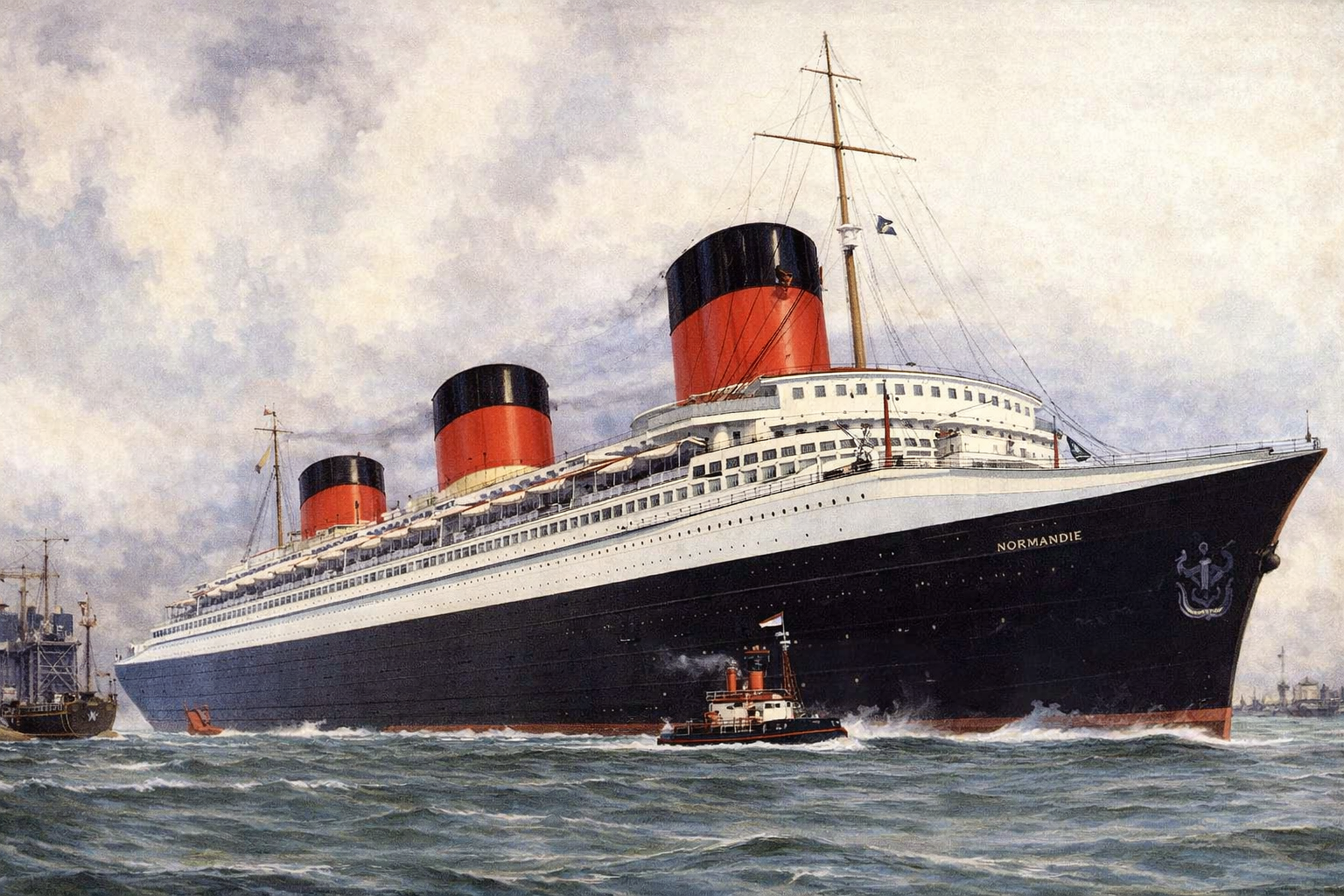
Compagnie Générale Transatlantique connected France with New York and a wider Atlantic world for more than a century, from nineteenth-century mail steamers to Île de France, Normandie, and the final transatlantic flagship France.
Basic answer
The company began as Compagnie Générale Maritime in 1855 and became Compagnie Générale Transatlantique in 1861. State-supported mail contracts helped define its early purpose. In 1864 the company inaugurated regular Le Havre–New York service, a route that became one of the central threads of French passenger shipping.
That history was never only about prestige flagships. CGT operated mail steamers, migrant carriers, intermediate liners, colonial-route vessels, wartime transports, rebuilt ships, and national showpieces. The famous ships make sense only when seen inside that larger operating system.
Historical arc
The Pereire brothers establish the company that would become CGT.
The company takes the name by which the French Line is best known.
Regular North Atlantic service begins and becomes a defining company route.
Express steamers and larger passenger ships strengthen CGT's competitive Atlantic position.
Paris, Île de France, and Normandie turn design and national style into major elements of the crossing.
The new flagship enters service and captures the Blue Riband.
Liberté and then France carry the French Line identity into the postwar Atlantic.
The Le Havre–New York passenger era ends and CGT is absorbed into a new corporate structure.
How to read the story
The great flagships projected a distinctly French idea of modernity, cuisine, décor, and Atlantic prestige.
French liner interiors developed a recognizable relationship to decorative arts, luxury, and national presentation.
Intermediate liners, migrant carriers, and route vessels reveal the commercial system beneath the famous flagships.
CGT competed within a larger world of British, German, Dutch, Italian, American, and Canadian lines.
Ships as case studies
These 19 guides span nearly a century of CGT passenger service, from the first generation of iron transatlantic steamers to the final purpose-built French Atlantic flagship.
Early Atlantic foundations
Belle Époque expansion
War and route diversification
Interwar modernity
Postwar continuity and final flagship
Sources and method