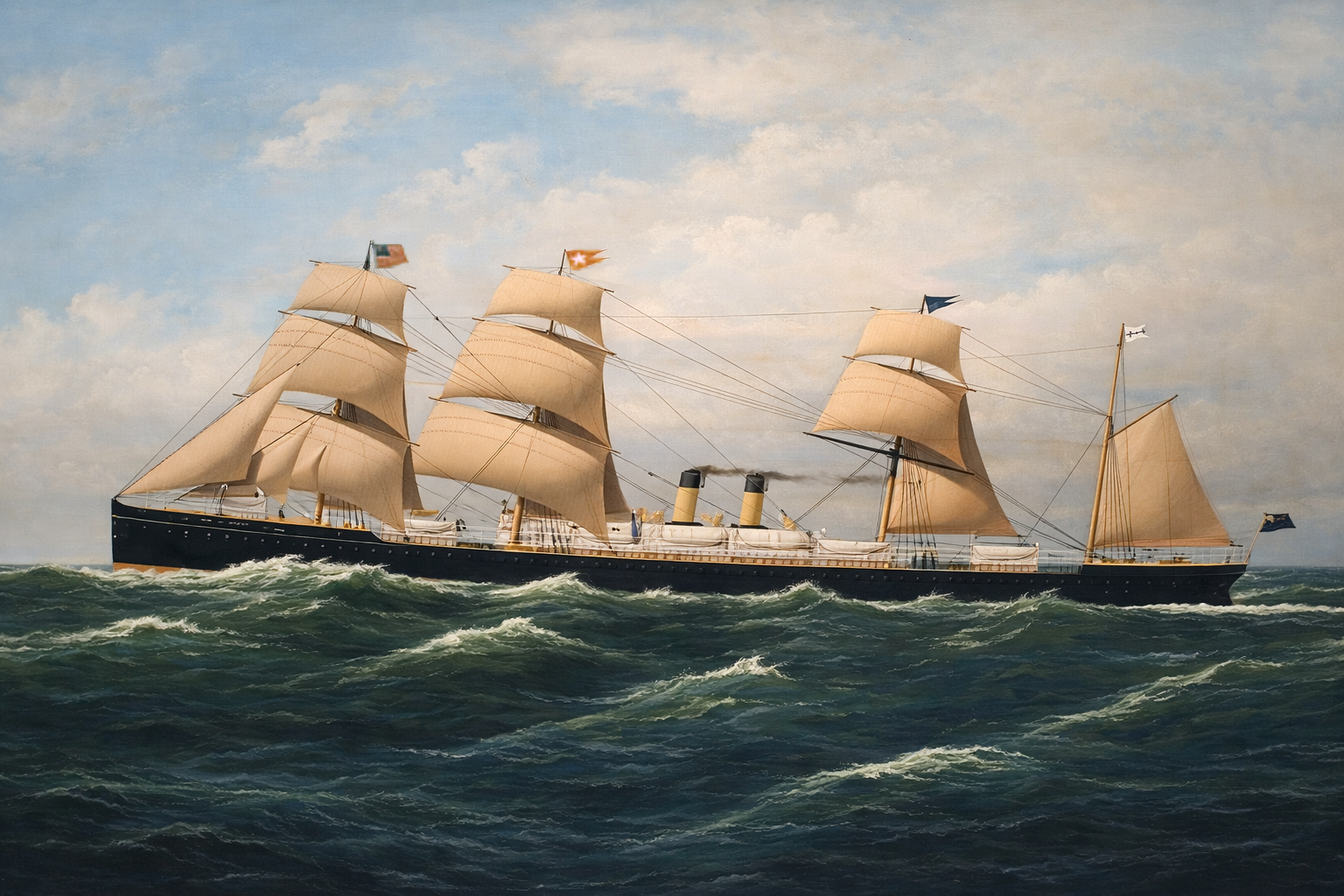
Ocean Liner Evolution Map
1838–1970 · A curator-minded map of major liner lineages in speed, comfort, scale, prestige, and the late-era transition
How to use this page
This page is not a complete fleet list. It is a lineage map: a visual guide to how major ocean-liner ideas evolved across more than a century. Rather than treating every ship as isolated, it traces recognizable design families—fast mail steamers, comfort-led Atlantic giants, state-backed prestige flagships, and the late liners that sailed into the age of air travel.
Scope note: these lineages are interpretive, not mechanical. A later ship does not “descend” from an earlier one in a strict technical sense; rather, it may continue a commercial logic, a design philosophy, or a public idea of what a flagship should be.
How to read the map
Read each branch from top to bottom. The connector spine indicates broad continuity—speed culture, scale, luxury emphasis, national prestige, or late-era adaptation. The page is intentionally selective: it is designed to orient, not to imply that every lineage is uncontested or complete.
Major lineages
These branches are arranged as historical storylines, not rankings. Together they show how the liner evolved from mail steamer to floating prestige object to late-era symbolic survivor.
★ The Cunard speed line
This is one of the clearest long arcs in liner history: early steamship reliability, then iron and steel, then express service, then the great 20th-century flagships. It is less a single technical chain than a durable institutional idea—Cunard as the dependable and increasingly prestigious Atlantic line.
★ The White Star comfort line
White Star’s contribution was not simply speed. It was the refinement of a different Atlantic ideal: size, steadiness, passenger comfort, and an increasingly polished onboard experience. This branch helps explain why White Star’s most famous ships were not always its fastest.
★ The German express and giant-ship line
German liners often pushed hardest where headlines were easiest to understand: speed, size, machinery, and imperial-scale spectacle. This branch helps show how the Kaiser-era rivalry evolves into the interwar modern express liners.
★ The French prestige and interior-culture line
In this branch, the liner becomes not only transportation or even prestige engineering, but a floating expression of national taste. French liners are often remembered through their interiors, public rooms, and design language as much as through speed or tonnage.
★ The Italian prestige line
The Italian branch shows how national prestige, design flair, and technical experimentation came together in the interwar and postwar periods. These are not always the first ships casual audiences name, but historians often value them as essential to the broader Atlantic story.
★ The American flagship line
The American story is more episodic than Cunard’s or White Star’s, but when it appears it appears forcefully: vast transferred tonnage, symbolic national flagships, and finally the great mid-century speed statement.
★ Pacific and Empire lineages
A full ocean-liner map should not pretend the Atlantic is everything. Pacific services, imperial routes, and regional prestige liners followed their own development patterns. They often emphasized endurance, route identity, hybrid passenger markets, and long-distance comfort over pure Atlantic-style express logic.
How this page fits the archive
Used alongside the Ship Guides Index, this page becomes a navigation layer rather than a stand-alone essay. Visitors can start with a lineage, then move into specific ship guides. In that sense, it functions like a museum orientation wall: broad enough to clarify, restrained enough not to pretend every branch is settled or exhaustive.
Sources (Selected)
This list stays broad and cross-check oriented.